by Alaska NewsMay 11, 2026(1h ago)8 min readAlaska
Share
The Alaska Senate Resources Committee heard a detailed presentation Wednesday on fiscal frameworks for liquefied natural gas projects. Consultant Nicholas Fulford of GaffneyCline outlined how property tax structures evolve during project development and compared Alaska's approach to other jurisdictions.
Fulford, senior director of LNG and energy transition at GaffneyCline, told the committee that Alaska faces a unique challenge among LNG-producing regions. The state's constitutional obligation to maximize resource value for citizens places it in a middle category between jurisdictions with minimal oversight and those where governments take equity stakes in projects. That constitutional duty creates a higher hurdle for diligence and understanding project economics than occurs in states like Texas or Louisiana, where individual LNG projects have minimal impact on state economies, he said.
Fulford noted there are about 130 LNG export terminals in 22 countries, and each has navigated similar challenges to those Alaska faces. These projects typically encounter very tough financial hurdles with thin margins initially, but the real value tends to come in following decades when they become huge contributors to the economy, he said.
The presentation focused on Senate Bill 280, which would shift Alaska LNG project property taxes from the current ad valorem system to an alternative volumetric tax of 6 cents per MCF. Fulford said resolving the property tax structure is critical for the legislature because the lack of resolution is potentially holding up dialogue with interested stakeholders. The property tax question has been under review since 2014 under multiple governors, with several revenue commissioners addressing it in different ways.
"The first, I would say, is an imperative for the legislature to resolve because the lack of a resolution on that is, I suspect, potentially holding up the dialogue with interested stakeholders," Fulford said. "The second one, the setting of the rate, is a more complex question."
Fulford suggested the legislature could set the 6-cent rate now but establish a framework for re-examining it as the project progresses toward final investment decision. He compared this approach to price reopener clauses in LNG sale and purchase agreements, which allow adjustments under constrained circumstances when initial contracts cannot foresee all changes.
State Sen. Clayman asked about establishing a sunset clause or time period for re-examining the tax framework if the project does not move forward or if circumstances change. Fulford said some thought would need to go into what that framework would look like, and that in an ideal world such a sunset clause would potentially correspond to key timeframes in project contracts. He suggested that might be a dialogue to have with the Alaska Gasline Development Corporation.
This article was drafted with AI assistance and reviewed by editors before publishing. Every claim can be verified against the original transcript. If you spot an error, let us know.
The presentation included comparisons to property tax subsidies offered to LNG projects in Louisiana and Texas. Fulford presented slides showing that the property tax holiday offered to Sabine Pass in Louisiana was worth about 33 cents per MCF. Texas projects received subsidies that were somewhat smaller, he said. Fulford provided an example calculation for Alaska showing approximately 78 cents per MCF, though he emphasized the calculation was not an accurate reflection of Alaska property tax but rather an approximation based on a $50 billion initial capital number depreciated over 20 years and taxed at 20 mils.
Fulford also discussed federal loan guarantees as another major economic variable, noting they could be worth about half the property tax question in terms of project economics. He said the interaction between property tax changes and federal support raises questions about how those features might affect each other.
State Sen. Forrest Dunbar questioned whether Alaska should apply similar discount rates to future revenues that project investors use when evaluating early-year tax burdens. Fulford responded that revenue stability also has value for the state and municipalities. A volumetric tax continuing in perpetuity has significance compared to property tax on a depreciated asset, he said. He noted that from a time value of money perspective, $60 million a year in today's money in 20 or 30 or 40 years has very low value once discounted, but for the state and communities involved, revenue that could continue for many decades has significance.
Fulford also addressed concerns about revenue distribution and transparency, noting the bill provides considerable discretion for the state to work on how funds are distributed. He said this question has come up frequently, including in comments from the boroughs.
The consultant discussed taxes tied to workforce accommodations and related project activity, presenting a slide showing that at a peak workforce of about 12,000 people and $200 per worker subsistence accommodation cost, expenditure could reach almost $1 billion around the middle part of the project. He said the topic of how activities related to the project are taxed represents a fairly material number.
State Sen. Bill Wielechowski pressed for more detailed economic modeling showing how different tax rates would affect project returns. He said the information presented comparing Alaska to other jurisdictions was not helpful for determining whether the state is maximizing resource value.
"What would be helpful to me is maybe some information from you or the department saying, well, the internal rate of return for the company needs to be 10%, pick a number," Wielechowski said. "If you tax at 6 cents, they have an 11% rate of return. If you tax at 7 cents, they have a 10.9% rate of return."
Fulford agreed that type of analysis would be consistent with approaches used in other jurisdictions, but noted the greatest uncertainty remains capital costs. The mechanics of LNG economics are relatively straightforward, but the assumptions will drive the outcome because in a very high capital cost outcome, the potential for government revenues is less and vice versa, he said. Fulford suggested the Department of Revenue's economic model, which has received guidance from the Alaska Gasline Development Corporation, might be starting to approach what he would describe as an open book economic model. He offered to work with DOR on what that looks like and checking it against other models.
The committee also heard about mechanisms other jurisdictions have used to recognize LNG project impacts on communities. Fulford discussed Papua New Guinea's approach, which combined financial benefits through gas royalties with an opportunity for local communities to invest in project equity through what was called the Kroton equity option. He noted that even with careful planning, creating fair mechanisms to address community disruption remains difficult. Papua New Guinea's framework has generated litigation since it was put in place.
State Sen. Kawasaki questioned whether Senate Bill 280's scope extends beyond property taxes. He noted the bill language refers to replacing "all state municipal property ad valorem and sales and use taxes on qualified property, municipal taxes on gross or net income, license fees, excise taxes, and other charges." Fulford said he had not encountered such comprehensive tax replacement in other jurisdictions, though detailed community assistance discussions occur in places where LNG projects have transformational impact.
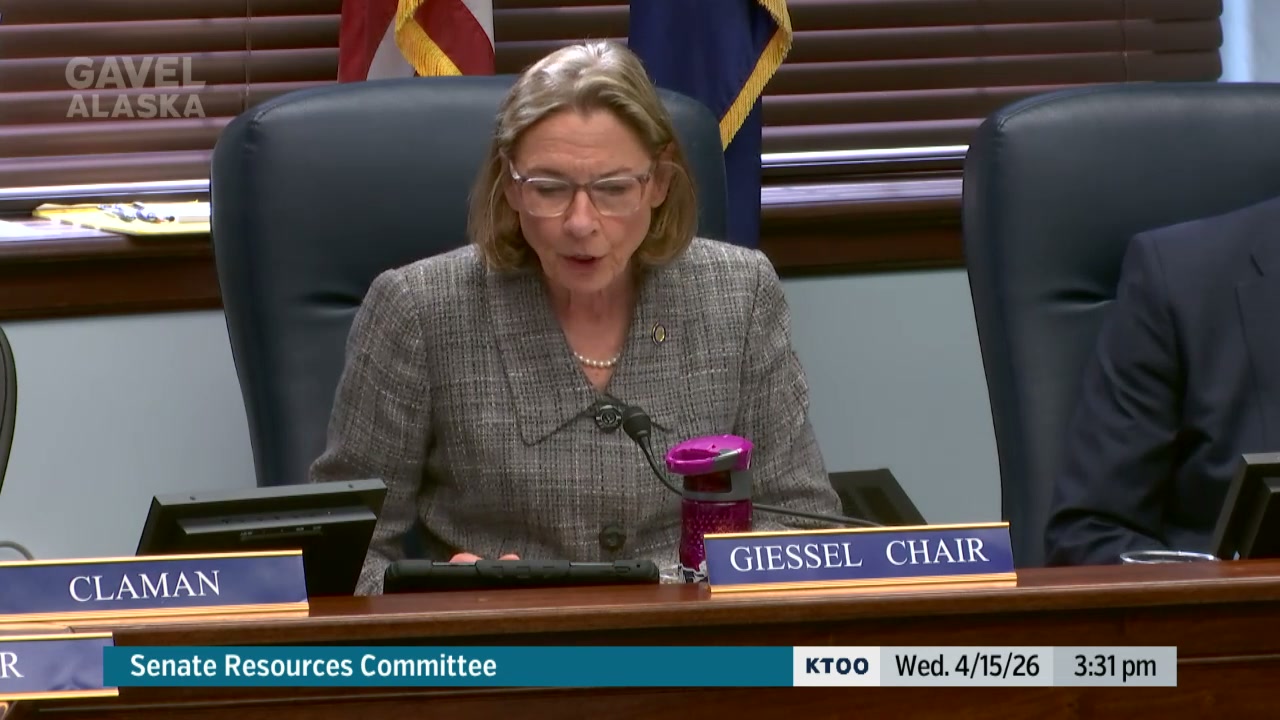
Committee Chair Giesel noted that the Regulatory Commission of Alaska would present to the committee next week. She also mentioned that the Alaska Oil and Gas Conservation Commission has a process for gas offtake authorization that would be pertinent to the discussion.
The committee heard public testimony from six individuals. Brian Kasloff, calling from Fairbanks on behalf of the Alaska Public Interest Research Group, testified that Glenfarne has refused to share critical information about project governance and economics. Kasloff said this is concerning given that Glenfarne has no proven track record, having never brought an LNG export project to final investment decision. He noted that Glenfarne has promised gas from a standalone Phase 1 pipeline would be competitive with imported LNG at $12 to $16 per thousand cubic feet. A 2023 estimate by the Berkeley Research Group for ENSTAR and other utilities estimated a far higher price for gas from a privately owned, in-state-only pipeline at about $28 per thousand cubic feet, he said.
Sean McDermott, energy policy analyst with the Fairbanks Climate Action Coalition, noted that without detailed cost estimates from AGDC and Glenfarne, legislators and Alaskans cannot know the true cost and impact of the project. He said Fulford acknowledged in March testimony that without the financial guardrails proposed in Senate Bill 275, existing Alaska law does not adequately protect Alaskans' interests. McDermott also noted that AGDC's Mark Kissinger told House Resources that the Phase 1 pipeline would not provide lower-cost gas to Alaskans. Project consultant Mark Begich recently suggested the cost may be $57 billion, while independent analysis suggests the number is likely upwards of $70 billion, he said.
Doug Woodby, representing 350 Juneau, thanked the committee for bringing forward transparency legislation. He said the developer suffers from a transparency gap regarding project timelines and costs. FEED studies for the gas treatment plant and liquefaction plant may not start until mid-year and will not be completed for a year, meaning final investment decision will not happen until sometime next year at the earliest, he said.
Ben Boettger, energy policy analyst with Cook Inlet Keeper, said the project is changing fast and it is far from clear that every possible scenario would necessarily bring benefit to Alaskans. He said the legislature should understand the variables and partners involved before making decisions about the project.
Mike Chenault, AGDC board member, testified that when creating AGDC, the legislature wanted to take decision-making out of the political arena and provide it to a board focused on assessing commercial, fiscal, and legal risk impacts. He noted the project has changed from the original ExxonMobil-led equity participation model to a project finance model where the project is financed with a combination of debt and equity underpinned by offtake agreements. The project finance model allows project sponsors to accept a lower rate of return of 10 to 12 percent compared to international oil companies who want 18 to 22 percent, making the project more economical, he said.
Maddy Halloran, an Anchorage resident, expressed concern about moving forward on such a costly project when legislators do not have a full picture of what it will cost the state. She suggested the legislature consider an analysis showing how much money could be saved by mobilizing a fraction of the project's cost into renewable energy projects.
Chair Giesel said the committee would continue hearing testimony at 9 a.m. Thursday, followed by testimony from Pegasus. Both Senate Bill 275 and Senate Bill 280 remain open for public testimony as the committee considers potential committee substitutes.
The Alaska LNG project as proposed by AGDC and Glenfarne envisions an 800-mile pipeline from the North Slope to a liquefaction facility near Nikiski with capacity to export natural gas to Asian markets. Cost estimates discussed in recent testimony have ranged from $44 billion to potentially $70 billion, though the project has not completed final engineering studies.
Stay informed. Support what matters.
Free, permanent access to local news you can verify. Subscribe to support Alaska News and go ad-free.

Comments
Sign in to leave a comment.
No comments yet. Be the first to share your thoughts.