
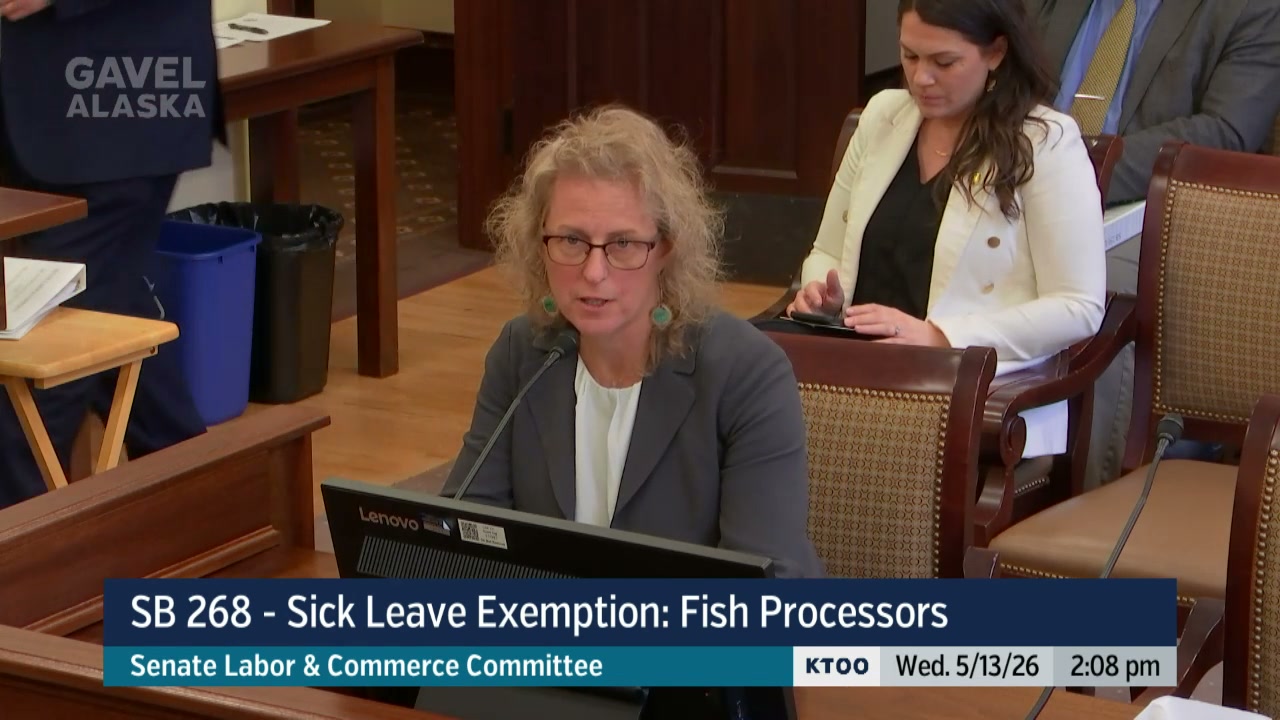
Frame from "Senate Labor & Commerce, 5/13/26, 1:30pm" · Source
Senate panel advances bill cutting sick leave for seafood workers
The Alaska Senate Labor and Commerce Committee heard legislation Wednesday that would reduce paid sick leave for seasonal seafood processing workers, modifying a voter-approved initiative to address industry concerns about end-of-season workforce shortages.
Senate Bill 268, presented at the request of the seafood processing industry, would cut annual paid sick leave for seafood processing workers from 56 to 48 hours and limit monthly usage to 12 hours. The bill also establishes a 30-day probationary period during which new workers cannot use sick leave. The measure aligns seafood processors with exemptions already granted to commercial fishermen, agricultural workers, and shrimp handpickers in the original ballot measure.
This was the committee's first hearing on the bill. Members set it aside for further consideration at a future meeting.
Julie Decker, representing the Pacific Seafood Processors Association, said current law creates financial incentives for workers to use accrued leave at season's end. The association represents 47 facilities in 22 coastal communities that buy from thousands of commercial fishermen.
"The mandatory provisions create a strong financial incentive for workers to utilize the paid sick leave during the final couple weeks of the season before they lose it," Decker said. "If a sufficient workforce is not in place during the season, processors cannot fully operate and continue to serve fishermen."
Decker told the committee she was discussing changes in a committee substitute version of the bill, noting that some members had already heard the legislation in a previous committee.
Senator Dunbar, an Anchorage Democrat, said he initially opposed limiting the ballot initiative but found the industry's arguments persuasive.
"I did not want to have a bill go forward that limited or repealed the ballot initiative," Dunbar said. "However, Ms. Decker and the PSPA have made, I think, persuasive arguments about the end of fishing season and the unique challenges that they face when a bunch of sick leave is accrued and folks will take it at the end and effectively shut down or significantly limit some of these fish processing plants."
Dunbar said the 12-hour monthly cap on page 2, line 29 of the committee substitute addresses the industry's core concern by preventing lengthy accruals that could disrupt operations.
"I hope that this helps the industry, which I think we all understand is having a lot of challenges right now, while simultaneously protecting at least some paid sick leave for these seasonal workers," Dunbar said.
The legislation comes as Alaska's seafood processing sector faces what Decker described as unique operational challenges. Processing facilities often operate in remote environments where workforce availability, housing, and transportation are tightly interconnected. Full-time seafood processing workers already receive paid sick leave as part of benefit packages that include health insurance, while seasonal employees receive different benefits including transportation, meals, and housing.
This article was drafted with AI assistance and reviewed by editors before publishing. Every claim can be verified against the original transcript. If you spot an error, let us know.
Related Coverage
Senate panel advances compromise on fish processor sick leave
Alaska News · 6d ago · 3 views · 93% match
House panel advances seafood industry data-sharing bill
Alaska News · 3d ago · 2 views · 83% match
House panel hears bill to let small Alaska fishermen process, sell catch directly
Alaska News · 1w ago · 4 views · 82% match
Alaska House panel advances free school meals for reduced-price students
Alaska News · 1mo ago · 2 views · 79% match
Senate panel advances fishing cooperative bill with electronic monitoring
Alaska News · 2w ago · 1 views · 79% match
Comments
Sign in to leave a comment.
No comments yet. Be the first to share your thoughts.