
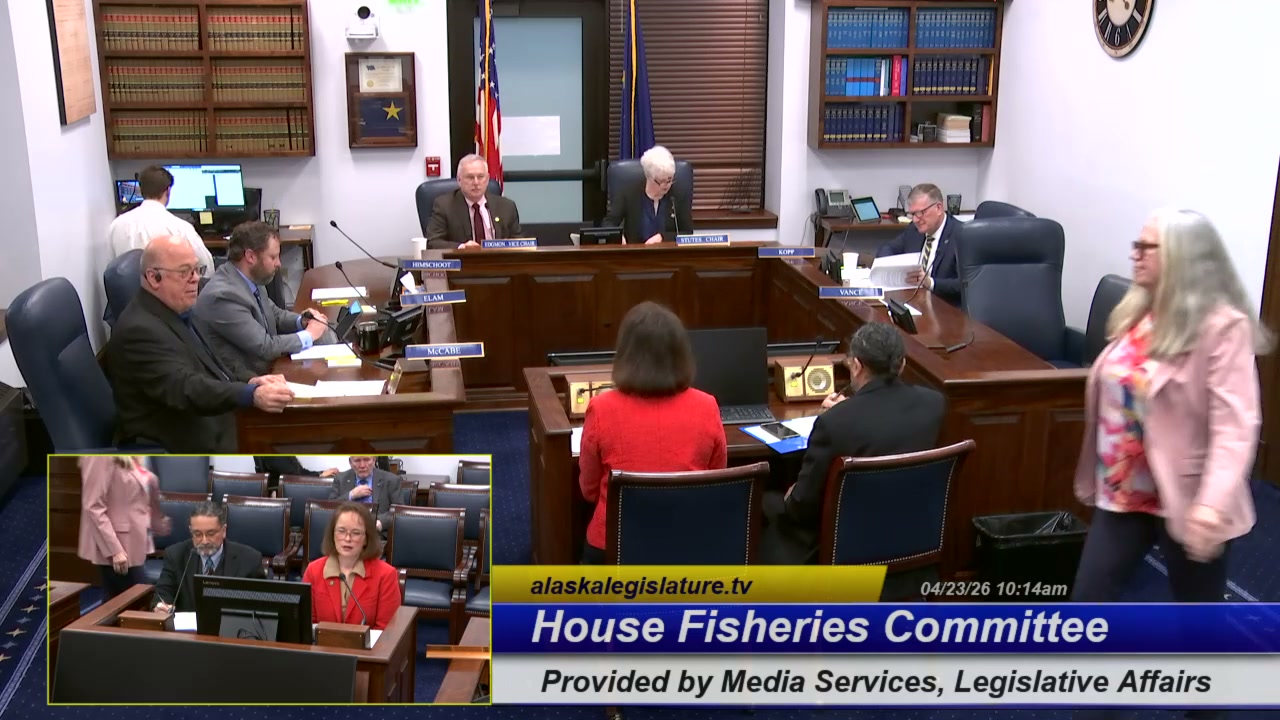
Frame from "HFSH-260423-1000" · Source
House panel hears bill to let small Alaska fishermen process, sell catch directly
The House Special Committee on Fisheries heard a bill Thursday that would allow small-scale commercial fishermen to process their catch onboard and sell directly to consumers without meeting the same regulatory requirements as industrial processors.
House Bill 356, introduced by Representative Sarah Vance of House District 6, would create what she calls a microfisheries pathway for vessels harvesting less than 10,000 pounds annually. The committee heard the bill on April 23.
The bill would let qualifying fishermen clean, fillet, and package up to 5,000 pounds of fish onboard without being classified as a full processing plant.
"House Bill 356 is what I like to call the Alaska Coastal Microfisheries Act," Vance said. "The goal is simple: make it easier for small Alaskan fishermen to stay in business and make a living."
Vance said the bill grew out of conversations with fishermen across her district who told her they needed the ability to process their own catch to stay viable. She said small boat fishermen and setnetters in Cook Inlet told her it does not pencil out to sell to processors like PacStar, but they could stay in business if allowed to process fish themselves.
"Alaska has lost too many small fishing operations to consolidation and bureaucracy," Vance said. "If you are a small Alaskan fisherman, this bill says we are getting out of your way so you can do what you do best."
Under current law, fishermen who want to do anything beyond basic handling can be treated the same as large shore-based processors. That triggers requirements under Alaska Statute 17.20.200 including full food establishment permits and facility standards that Vance said do not fit small operations. She said commercial fishermen are not even allowed to cut a fish into two fillets under current rules.
The bill would streamline permitting for qualifying fishermen. The Department of Environmental Conservation would have to approve or deny permits within 30 days, and fees would be reduced to $100. To qualify, fishermen must harvest less than 10,000 pounds annually, use a vessel under 50 feet or under 65 feet for streamlined permitting, and hold a direct marketing fisheries business license.
The bill maintains federal safety standards under 21 CFR Part 123. DEC would have to determine that vessels meet those federal standards and that the species being harvested present a low risk of spreading pests or disease before granting an exemption from additional state health regulations.
"This is not deregulation, it is right-sizing regulation," Vance said. She said fishermen who want to sell at the dock are currently held to the same standard as an onshore processor or a restaurant, requiring them to take on a lot of equipment and meet regular safety standards. The bill would reduce that burden while still meeting safety standards.
This article was drafted with AI assistance and reviewed by editors before publishing. Every claim can be verified against the original transcript. If you spot an error, let us know.
Related Coverage
Alaska Senate panel weighs restrictions on vacuum-sealed homemade food sales
Alaska News · 2w ago · 1 views · 81% match
Senate panel advances fishing cooperative bill with electronic monitoring
Alaska News · 6d ago · 1 views · 79% match
Senate panel hears setnet cooperative bill, sets aside land transfer
Alaska News · 5d ago · 1 views · 78% match
Alaska House panel hears retirement savings bill for small business workers
Alaska News · 2d ago · 1 views · 77% match
House Faces Russian Seafood Ban, Spending Limits, and Healthcare Access Bills
Alaska News · 5d ago · 3 views · 77% match
Comments
Sign in to leave a comment.
No comments yet. Be the first to share your thoughts.