
Senate committee holds Senate Bill 259 on property tax caps
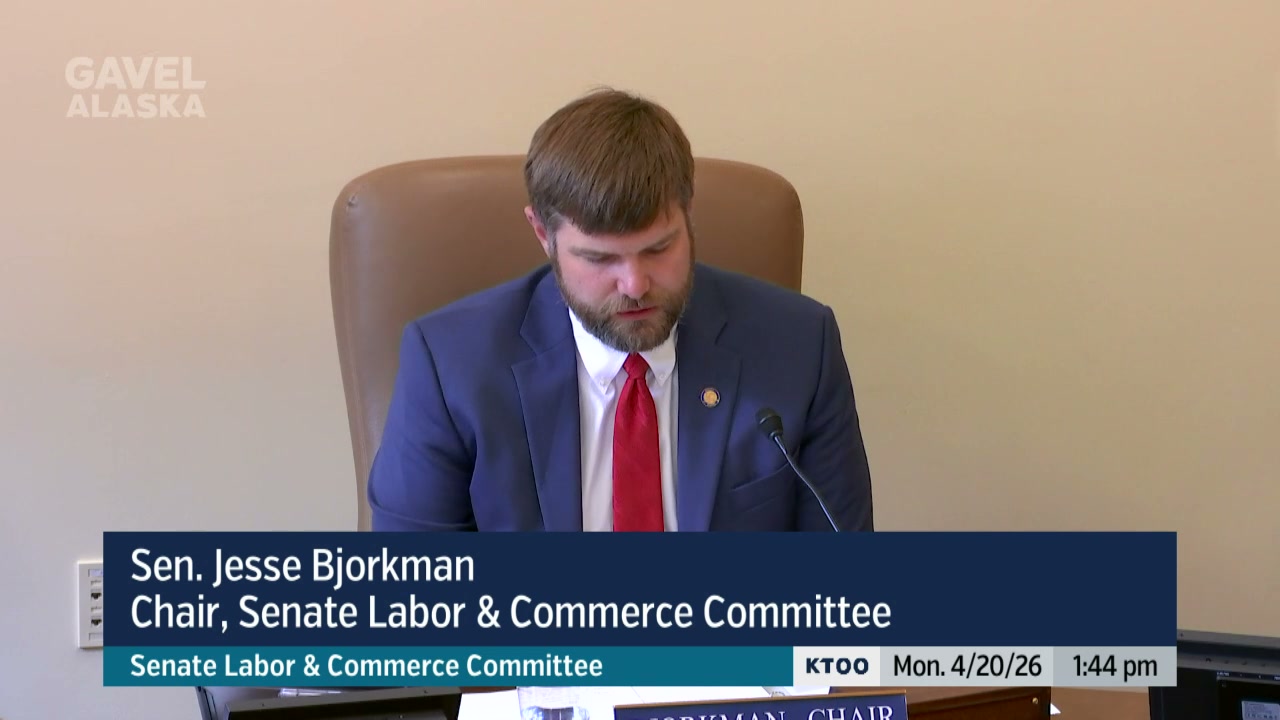
The Senate Labor and Commerce Committee held Senate Bill 259 on Monday after hearing concerns about unintended consequences of allowing municipalities to cap property tax assessment increases.
The bill would give Alaska municipalities the option to limit annual increases in assessed property values to between 3 and 10 percent. Assessors would be required to adjust property values to market rates every 10 years and whenever property changes hands or receives improvements.
The committee considered a substitute version that would expand the cap to all property types, not just residential. Bill sponsor Senator Bjorkman said the change would make administration easier for local and state assessors. He said assessments generally go up on average 5 percent per year but experience significant spikes. The bill would allow municipalities to smooth those increases while retaining flexibility to adjust their mill rates to meet revenue goals.
Sandra Mohler, director of the Division of Community and Regional Affairs, told the committee the caps could create problems for municipalities and the state. She said communities that adopt the cap could see reduced revenue if property values rise faster than the allowed percentage. A property jumping from $100,000 to $150,000 in one year would exceed even a 10 percent cap. That means the municipality would lose tax revenue on that $50,000 gain.
Mohler said the caps could also shift tax burdens between property owners and complicate the state's calculation of full and true value, which determines how much communities must contribute to school funding. She said her division would need to track which municipalities adopt the cap and adjust calculations accordingly.
"There will be unintended consequences," Mohler said. "It was very difficult for the division to determine the breadth of that, not knowing how many would participate or accept these optional exemptions."
Mohler outlined several administrative challenges the bill would create. She said the state assessor would face added complexity in collecting data because the division would have to ensure jurisdictions are evaluated consistently. When calculating full value determinations, the state would need to account for which jurisdictions have elected to implement the cap and adjust those values to compare them on a level playing field with jurisdictions that have not adopted the cap. She also said the caps could potentially disrupt the market, as assessment of real property provides a picture of the actual market in a location.
Bjorkman questioned whether the administrative burden would be significant. He noted that municipalities already vary in which optional property tax exemptions they offer for seniors, disabled veterans and volunteer firefighters.
This article was drafted with AI assistance and reviewed by editors before publishing. Every claim can be verified against the original transcript. If you spot an error, let us know.
Related Coverage
Senate panel advances property tax cap bill despite state warnings
Alaska News · 17h ago · 1 views · 95% match
Senate panel examines regulatory questions on gas pipeline tax plan
Alaska News · 20h ago · 8 views · 82% match
Mayors Oppose Alaska LNG Tax Bill, Cite Revenue Concerns
Alaska News · 1w ago · 4 views · 81% match
Senate Finance hears tax modernization bill, sets aside for further review
Alaska News · 2h ago · 79% match
Senate panel advances retirement bill despite $400M cost shift concern
Alaska News · 1w ago · 1 views · 78% match
Comments
Sign in to leave a comment.
No comments yet. Be the first to share your thoughts.