
House panel hears bill to strengthen campaign finance disclosure
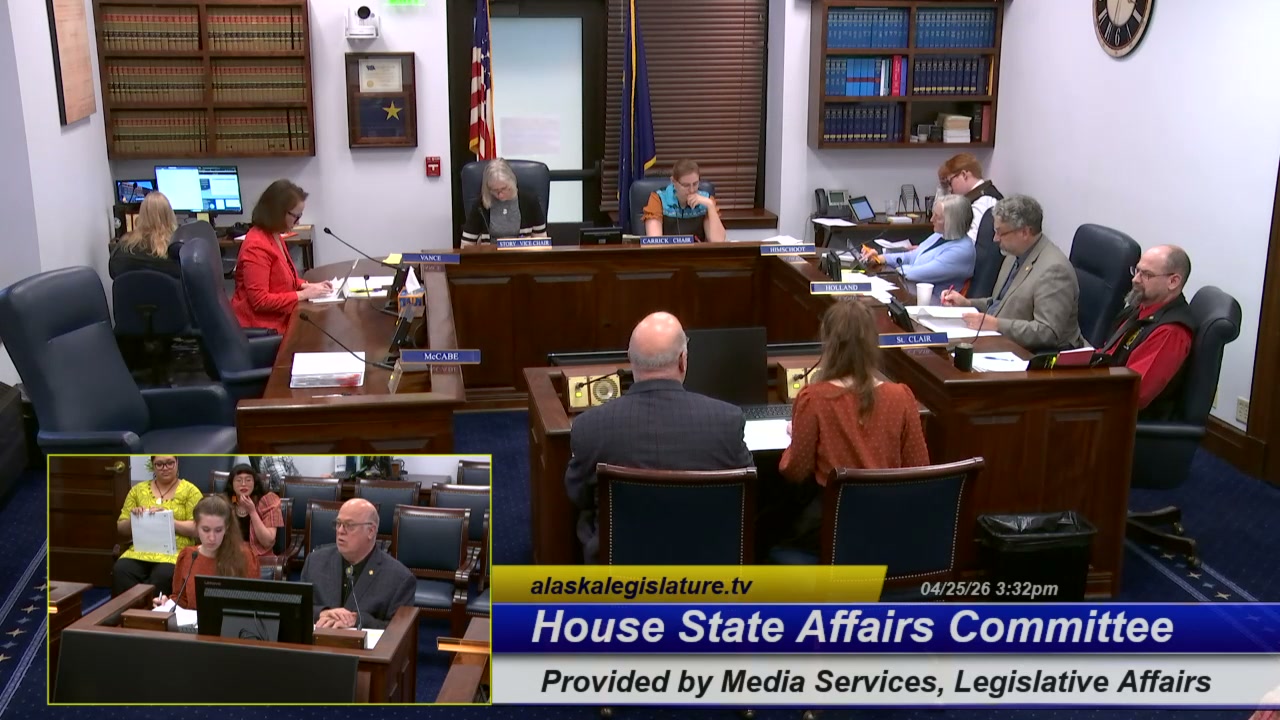
The Alaska House State Affairs Committee held an introductory hearing Saturday on legislation aimed at strengthening disclosure requirements for political contributions, particularly those from outside Alaska.
Representative Kevin McCabe presented House Bill 371, which would require groups making independent expenditures in Alaska elections to maintain a physical presence in the state and disclose when a majority of their funding comes from non-residents. The bill also addresses bundled contributions, where multiple small donations are aggregated and contributed under one name.
"House Bill 371 is about transparency and accountability in Alaska's elections. At its core, this bill ensures that Alaskans know who is funding the political messages they see, especially when that funding is coming from outside our state," McCabe said. "This is not about limiting speech. It is about ensuring transparency so Alaskans can make informed decisions with full knowledge of who is trying to influence our elections."
The legislation comes as the latest effort to update Alaska's campaign finance framework, which has evolved significantly since 1996 when the Legislature banned business and union contributions, capped individual contributions at $500, and restricted out-of-state funding for candidates and groups. The Ninth Circuit struck down those $500 individual contribution limits in 2021 as unconstitutional. The Legislature recently passed House Bill 16 to update campaign finance laws by requiring groups to maintain Alaska addresses, adjusting contribution limits, and enhancing Alaska Public Offices Commission reporting requirements.
While HB 16 addressed group registration and contribution limits, HB 371 goes further by requiring independent expenditure groups to disclose when most of their funding comes from non-residents and by mandating disclosure of bundled contributions exceeding $10,000. The new bill would also update rules for how candidates dispose of campaign assets after elections.
McCabe said HB 371 builds on amendments he offered during floor debate last year that drew broad interest but did not advance. Those amendments focused on updating Alaska's campaign finance laws to address modern fundraising methods including online donations, Venmo, and PayPal. "A good chunk of this law was written in 1972, which is about four years before I remember the first VIC-20 or Commodore 64 computer," McCabe said, noting that many current statutes predate the internet and digital payment systems.
McCabe pointed to persistent concerns about transparency despite existing disclosure requirements. "One of the reasons that ranked choice voting was adopted is it was dark money, of eliminating dark money. Well, we have that and we have had that in place because Alaskans wanted to have more campaign disclosure and we have had it for four years. But I have people tell me, I do not feel like it shifted as much as far as the transparency of who is influencing our elections on large scale," he said.
This article was drafted with AI assistance and reviewed by editors before publishing. Every claim can be verified against the original transcript. If you spot an error, let us know.
Related Coverage
House panel hears bill requiring disclosure of out-of-state campaign funding
Alaska News · 2h ago · 97% match
House Finance weighs bill to standardize state payment timelines
Alaska News · 2w ago · 9 views · 78% match
House committee hears bill to eliminate tax discounts
Alaska News · 1d ago · 1 views · 77% match
Senate Finance hears corporate tax shift targeting online sales to Alaskans
Alaska News · 2d ago · 1 views · 76% match
Alaska Lawmakers Propose Legislative Oversight of $80B Permanent Fund Board
Alaska News · 1w ago · 1 views · 76% match
Comments
Sign in to leave a comment.
No comments yet. Be the first to share your thoughts.