
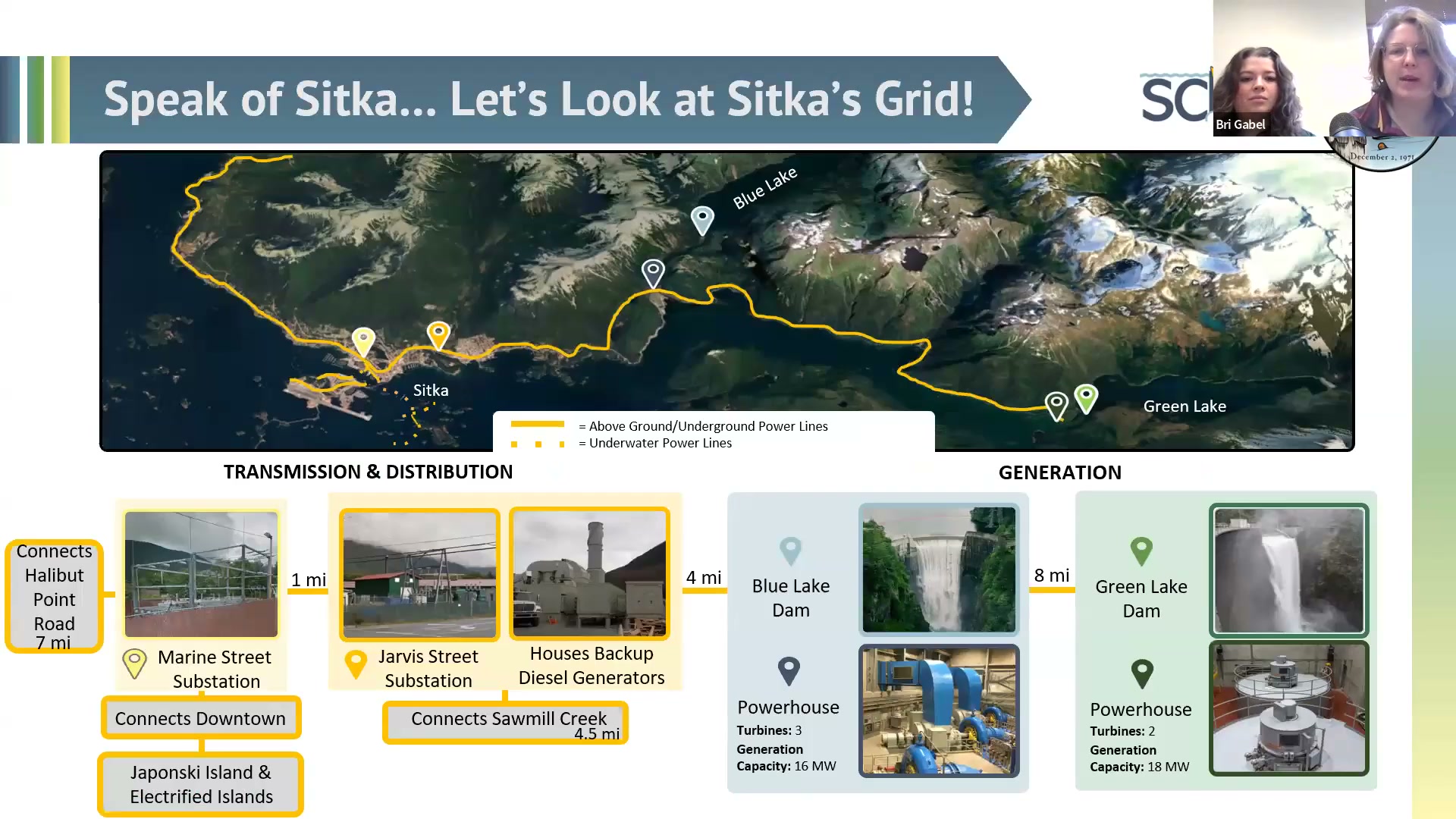
Frame from "Sitka’s Energy Economics (Connect to the SCRES Webinar 3 of 5)" · Source
Sitka's $110M electric debt: spreading infrastructure costs to 2050
Sitka's electric utility carries $110 million in infrastructure debt that officials say spreads costs over time rather than hitting ratepayers with prohibitive upfront charges.
The debt represents 42 percent of the city's annual revenue requirement and is expected to be paid off by approximately 2050, Planning and Community Development Director Amy Ainslie said during a public webinar Wednesday on energy economics. The debt finances both replacement of aging assets and expansion of the system's generating capacity.
Sitka operates as a public utility, meaning all revenue goes back into infrastructure rather than to shareholders. That structure allows the city to use debt differently than investor-owned utilities, Ainslie said.
"Debt payments buy us and our future generations ownership in our infrastructure, as opposed to an investor-owned utility," Ainslie said. In a private utility, ratepayers effectively buy shareholder value when paying down debt.
Without debt financing, the city would need to charge ratepayers the full cost of major projects upfront. "If we didn't use debt to pay for our replacements or expansions, we would have to pay for those things upfront out of pocket, which would make your rates basically cost prohibitive," Ainslie said.
The debt load puts Sitka in line with other municipal utilities nationwide, Ainslie said. Larger public utilities carry far higher debt totals, though they also serve larger populations to spread costs across.
Sitka's $19.5 million annual revenue requirement breaks down roughly evenly between operating expenses and capital expenses. Operating expenses, 48 percent of the total, cover day-to-day costs like maintenance, personnel, insurance, and administrative support. Capital expenses, 52 percent, include the infrastructure debt and depreciation, which accounts for eventual replacement of major assets.
Current residential electric rates stand at 21.5 cents per kilowatt-hour, with a monthly customer charge of $21.20. The rates vary by customer class: residential, commercial, public authorities, and harbors. Each class gets allocated a portion of the revenue requirement based on usage patterns and other factors.
The city manages debt responsibly through rate studies, condition assessments of infrastructure, resilience planning, and pursuing grants, Sustainability Coordinator Bree Gabel said. Future debt levels will depend on how much additional generating capacity Sitka needs, which the ongoing Sitka Community Renewable Energy Strategy process aims to clarify.
Sitka has grappled with electric fund deficits before. In 2016, the Assembly debated options to address a nearly $3 million shortfall tied to Blue Lake Dam costs. The following year, the finance department estimated a deficit between $500,000 and $1 million, prompting discussion of seasonal rate changes.
This article was drafted with AI assistance and reviewed by editors before publishing. Every claim can be verified against the original transcript. If you spot an error, let us know.
Related Coverage
Sitka Partners with Federal Labs to Chart Path to Net-Zero by 2050
Alaska News · 1h ago · 78% match
Sitka Floatplane Base Costs Double to $34M, Forcing Design Cuts
Alaska News · 1h ago · 75% match
Sitka seeks vendors to manage record 480,000 cruise passengers in 2022
Alaska News · 1h ago · 72% match
Rural Alaska Electricity Costs Run Three to Five Times Urban Rates
Alaska News · 1w ago · 1 views · 71% match
Senate panel advances retirement bill despite $400M cost shift concern
Alaska News · 2w ago · 1 views · 71% match
Comments
Sign in to leave a comment.
No comments yet. Be the first to share your thoughts.