
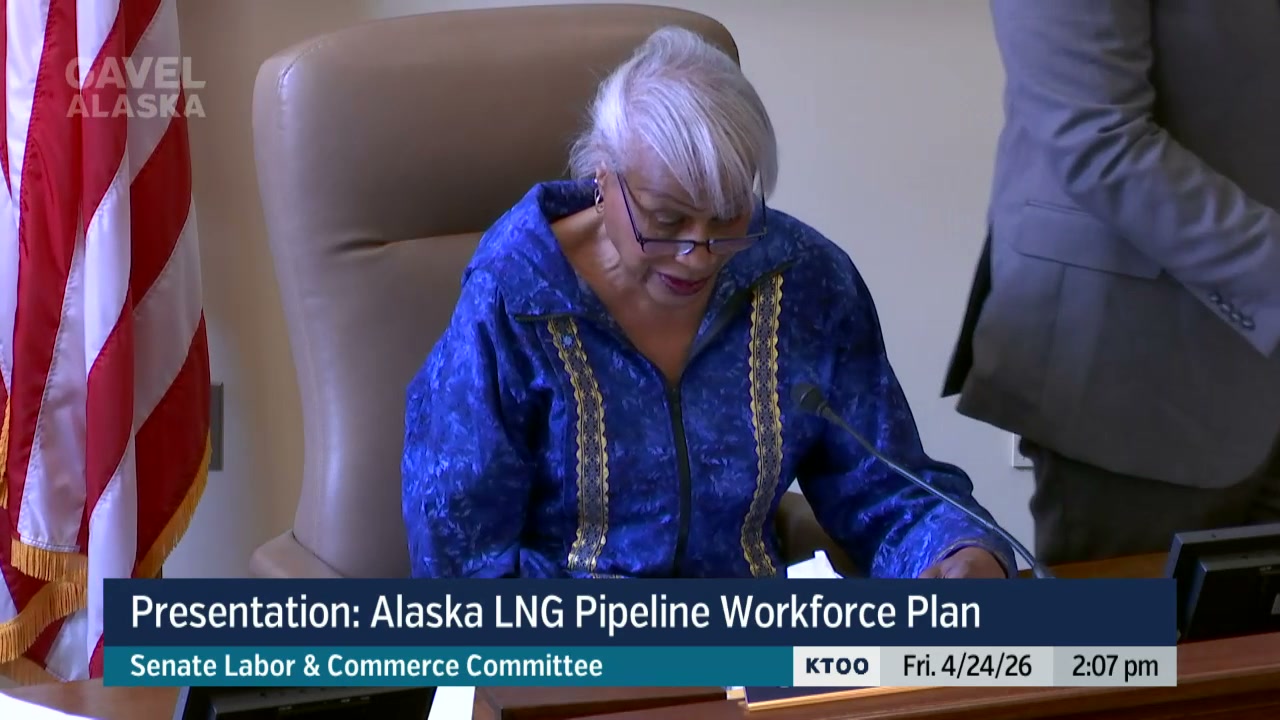
Senate panel hears workforce plan for Alaska LNG pipeline
The Senate Labor and Commerce Committee heard a presentation Friday on workforce needs for the Alaska LNG pipeline project, with consultants warning the state must act immediately to prepare workers for construction that could begin as soon as 2027.
Joey Crump, president of Northern Industrial Training, told the committee the project will require roughly 6,600 workers at peak construction. That is a floor estimate that could climb higher. The 800-mile pipeline from the North Slope to a Nikiski export terminal, with a projected cost of $40 billion to $44 billion, would need workers across dozens of occupations. Those include 1,900 engineers, 1,600 pipefitters and welders, 450 ironworkers, 400 electricians, and 3,500 logistics workers. When combined with other major projects on the horizon, including Donlin Gold and the Port of Nome expansion, peak demand could reach 8,700 workers at once.
"Alaska is a small state, and we cannot independently supply the workforce required for multiple concurrent projects, or frankly, a big one like AKLNG," Crump said. "That provides us with an opportunity to strategically invest and strengthen in our workforce ecosystem and the Alaska residents, but the urgency is that we have to do it now."
The presentation updated a 2018 workforce plan commissioned by the Alaska Workforce Investment Board. Dirk Kraft, the board's executive director, said the state needed a fresh analysis because the project timeline has shifted, ownership has changed, and multiple large projects now compete for the same workers.
Alaska faces a shrinking labor pool. The working-age population has dropped by roughly 30,000 over the past decade. The workforce is aging, with up to half of workers in key trades now 45 or older. Non-residents already account for about 23 percent of Alaska's total workforce, the highest share in three decades. Construction saw a 24 percent jump in non-resident workers from 2022 to 2023.
The state's training system operates at only 60 to 80 percent capacity, according to survey responses from dozens of training providers. Crump said the system could produce more workers if barriers are removed. Those barriers include instructor shortages, outdated equipment, and funding that covers tuition but not living costs while students train.
"The problem with that kind of thinking is that it forgets that the cost of training is very rarely the barrier," Crump said. "It is the cost of not working while you are training that is the barrier."
The report identifies four immediate priorities. Expand short-cycle vocational programs that feed other training pathways. Grow registered apprenticeships. Invest in instructor capacity and facilities at high-performing providers. Redesign funding to cover student support costs like child care and housing.
This article was drafted with AI assistance and reviewed by editors before publishing. Every claim can be verified against the original transcript. If you spot an error, let us know.
Related Coverage
Senate panel examines LNG project economics, megaproject risks
Alaska News · 1d ago · 4 views · 82% match
Senate panel examines regulatory questions on gas pipeline tax plan
Alaska News · 2d ago · 9 views · 79% match
Senate Committee Hears Testimony on Nurse Licensure Compact Bill
Alaska News · 2w ago · 2 views · 78% match
Senate Panel Questions DNR Commissioner Nominee on Gas Development
Alaska News · 2w ago · 10 views · 77% match
Alaska judicial conduct commission to hold rare probable cause hearing this spring
Alaska News · 2d ago · 7 views · 77% match
Comments
Sign in to leave a comment.
No comments yet. Be the first to share your thoughts.