Senate Panel Advances Bill Tying Hunting Rights to 180-Day Residency
by Alaska NewsMay 13, 2026(1h ago)6 min readAlaska
Share
The Alaska Senate Resources Committee voted Tuesday to advance legislation that would align resident hunting and fishing license requirements with Permanent Fund Dividend eligibility standards. The bill allows residents to be absent from Alaska for up to 180 days per year with additional exemptions for allowable reasons.
The Alaska Senate passed similar legislation in April 2024 when it approved Senate Bill 171 by a 15-5 vote to tie hunting and fishing license residency directly to PFD eligibility standards. Rep. Rebecca Himschoot introduced the current House Bill 93 in January 2024 before the House Resources Committee to address enforcement gaps for year-round residency. The Alaska House passed HB 93 in 2026, closing loopholes while maintaining exemptions for military, students, and new residents after 12 months.
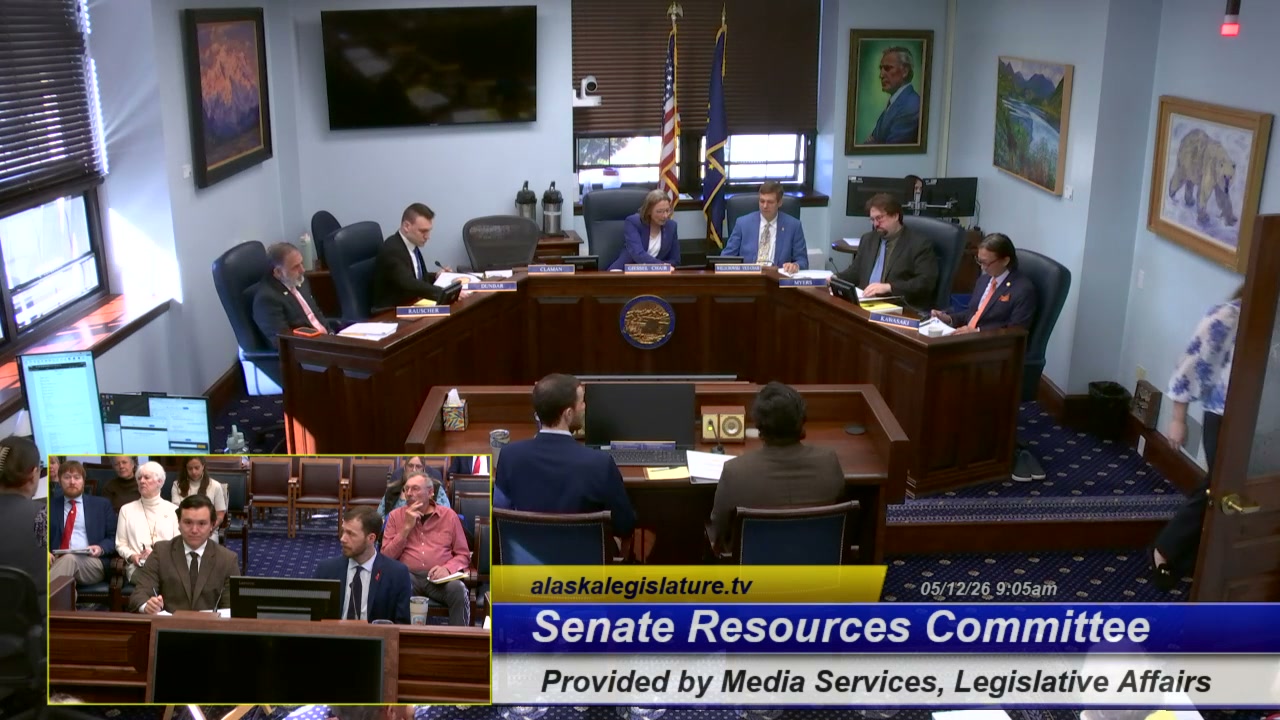
House Bill 93 passed the committee 5-2 in its second hearing after members rejected a broader amendment that would have expanded exemptions for workers who travel out of state.
Current Alaska law requires maintaining a home in the state for 12 consecutive months, not claiming residency elsewhere, and demonstrating intent to remain. But enforcement has proven difficult without a specific day-count standard, according to Alaska Wildlife Troopers.
"When we look at these cases, there's a couple things we're looking for," said Major Aaron Frenzel, Deputy Director of Alaska Wildlife Troopers. "The ones that are more difficult are the people that do not obtain those benefits. They're living out of state for 9, 10 months a year, coming up to just use Alaska's resources in July, maybe September while they're hunting."
The bill allows residents to be absent from Alaska for up to 180 days per year, or longer if the absence qualifies under existing PFD exemptions. Those exemptions include military service, medical treatment, caring for family members, and student status.
Rep. Himschoot said the legislation aims to create an enforceable standard while preserving flexibility. "The reason we want to use the dividend standard is that it's been tested by the courts," she said. "And as the dividend allowances, eligible allowances, sorry, allowable absences change, those would also then apply to your residency for hunting and fishing."
The bill includes a delayed effective date of January 2028, giving current residents time to adjust their schedules to meet the new requirements. Himschoot noted one key difference from PFD eligibility: "The 12 months in the dividend is clearly a calendar year, January to December. In House Bill 93, it's just 12 months. So if you come to Alaska in June, the following year in June, you would be eligible to hunt and fish as a resident."
This article was drafted with AI assistance and reviewed by editors before publishing. Every claim can be verified against the original transcript. If you spot an error, let us know.
The committee rejected an amendment from Sen. Rauscher that would have broadened exemptions for workers who spend extended periods out of state, including construction workers, consultants, cargo pilots, and those caring for non-critically ill family members. The amendment failed 2-5.
A committee member raised concerns that the amendment's language was too broad. "I think the one that I'm most concerned about is on page 3, line 17 through 18, on working in a trade, consulting on a matter of professional expertise, or practicing a profession not otherwise addressed," the senator said. "I mean, that could basically mean you just get a job out of state and you continue to say you're an Alaskan resident."
Himschoot opposed the amendment, arguing that any new exemptions should be added through changes to PFD statute rather than creating separate standards. "While these are worthy of consideration, all of this should be done through the dividend," she said. "And I think we should recognize with House Bill 93, there will be additional pressure on the dividend."
Sen. Myers shared his own experience working as a truck driver hauling freight between Washington and Alaska in 2018. He calculated he was gone 89 days over approximately six months. "If I had worked a full calendar year, I could have been pushing that 180 days pretty easily," he said. "So the concerns that Senator Wielechowski is bringing up, lines 17 and 18, to me, that is the fix. That is the fix that has to happen, whether we're talking about the dividend or whether we're talking about this bill with hunting and fishing rights."
Some committee discussion addressed whether existing allowable-absence provisions already cover certain medical and caregiving situations raised by opponents.
Public Testimony
The committee heard testimony both supporting and opposing the bill. Supporters argued the bill would protect fish and game resources and give law enforcement better tools to stop non-residents from claiming resident privileges.
"Residents are generally allowed to take more fish and game than non-residents," said David Eggleston, chairman of the East Prince of Wales Advisory Committee. "What we see throughout the state are people coming to Alaska year after year claiming to be residents. They purchase resident sporting licenses instead of the more expensive non-resident licenses."
Cabot Pitts, a hunting outfitter and air taxi operator from Palmer, said the bill would ensure benefits go to those who truly live in Alaska. "Being an Alaskan resident is a huge investment that one takes to actually living in the state full-time to benefit from these privileges we are allowed as Alaska residents," he said.
Opponents warned the bill would penalize legitimate residents, particularly retirees and workers who must travel for employment but maintain homes and families in Alaska. Some testified that existing constitutional and statutory residency standards already address the issue.
"This bill fairly targets older Alaskans like me who spent a lifetime building Alaska, paying taxes, voting, raising families, contributing to our communities," said Gary Hollier, a 72-year-old lifelong Alaska resident from Kenai. "Many seniors spend longer periods outside for medical care, to visit families, or simply to escape harsh winter conditions. This does not mean Alaska is no longer my home."
Brett Bradford, a commercial fisherman from Cordova, said the bill would hurt fishermen who work outside Alaska during winter months. "The sponsors of this bill aim to penalize these residents," he said. "It seems that the sponsors of this bill are prioritizing access of our Fish and Game resources to non-residents and the guided hunting and fishing industry over our lifelong residents."
Mark Richards, representing Resident Hunters of Alaska, said his organization opposes the bill as written despite supporting its intent. "While we certainly support the intent of this legislation, we just can't support it as written due to the number of real Alaskans who will be disenfranchised in holding a resident hunting or fishing license," he said.
Jill Weitz, representing the Central Council of Tlingit and Haida Indian Tribes of Alaska, testified in support. "For Native Alaska communities and many rural Alaskans, subsistence is not a recreational activity. It is a cornerstone of food security, cultural continuity and community well-being," she said.
Impact on Alaskans
Opponents testified that the legislation could affect a large number of Alaskans who do not apply for the Permanent Fund Dividend each year. Those residents would need to document their time in Alaska through other means if their residency is questioned.
According to testimony from the bill sponsor and Alaska Wildlife Troopers, residents who do receive the dividend would have a simpler path to demonstrating residency. Troopers testified they could verify residency by checking PFD records rather than conducting investigations into plane tickets, domicile, and intent to remain.
Resident hunting and fishing licenses cost significantly less than non-resident licenses. For example, a resident grizzly bear tag costs $25 while a non-resident tag costs $1,000 and requires hiring a guide.
The committee voted 5-2 to move the bill forward, with Sens. Dunbar, Clayman, Wielechowski, Kawasaki, and Giessel voting yes. Sens. Myers and Rauscher voted no. The bill now advances to the full Senate for consideration.
Stay informed. Support what matters.
Free, permanent access to local news you can verify. Subscribe to support Alaska News and go ad-free.

Comments
Sign in to leave a comment.
No comments yet. Be the first to share your thoughts.