
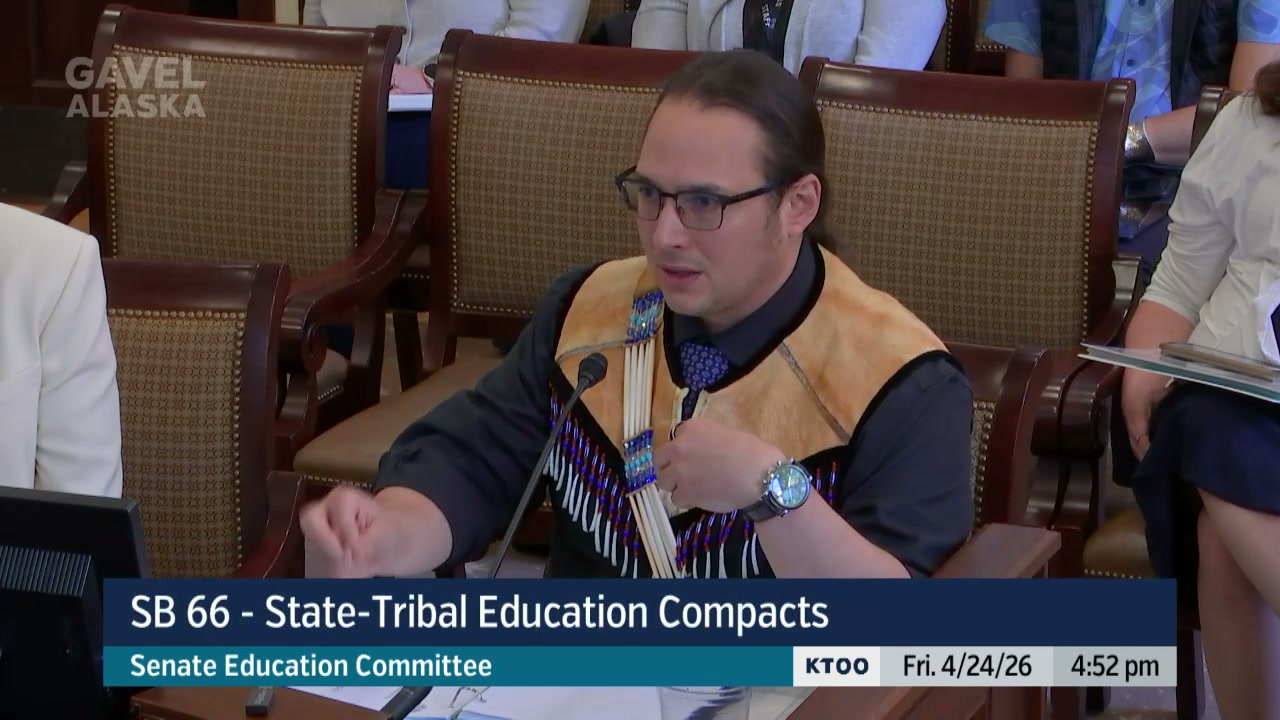
Frame from "SEDC-260424-1530" · Source
Senate Education Committee Advances Opioid Awareness Bill, Hears Tribal School Compact Proposal
The Alaska Senate Education Committee moved forward Friday with legislation requiring opioid education in middle and high schools. The committee also heard the first presentation on a proposal to allow tribes to operate public schools under state-tribal compacts.
The committee advanced Senate Bill 228, which directs the Department of Education and Early Development to create an opioid abuse awareness and prevention curriculum for grades 6 through 12. Schools would teach the material during Red Ribbon Week, an annual drug prevention campaign.
Senator George Rauscher, the bill's sponsor, said the measure aims to intervene before tragedy strikes.
The committee adopted a substitute version that adds language directing the Alaska Department of Health to request funding from the state's opioid settlement steering committee within six months of the bill's effective date. Mike Mason, aide to committee chair Senator Löki Tobin, said the change came from committee members seeking uses for settlement money.
Senator Keele praised the prevention approach. "The legislature has done a lot of work on the criminal penalty side of the opioid epidemic that we have," Keele said. "This is a step in the prevention direction, and we have got to hit it from that angle too."
The committee then turned to Senate Bill 66, sponsored by Governor Mike Dunleavy to establish state-tribal education compacts. The bill would allow federally recognized tribes to operate public schools through government-to-government agreements with the state.
Commissioner Dena Bishop said the legislation would create opportunities for families, especially those in tribal communities, to stay engaged in public education in ways that reflect their values, cultures, and needs.
The proposal grew from work that began with Senate Bill 34, enacted in 2023 to authorize a demonstration project. Five tribal partners participated in negotiations with the state from April through December 2023. Each received grants for the compact negotiations: the Inupiat Community of the Arctic Slope, Central Council Tlingit and Haida Indian Tribes of Alaska, Ketchikan Indian Community, Knik Tribe, and a consortium of King Island Native Community and Native Village of Solomon.
Dr. Joel Isaac, the department's compacting consultant, explained that tribally compacted schools would function as school districts for funding purposes. They would receive money through the state's foundation formula based on student enrollment. The schools would remain public, open to all students, and funded with public dollars.
Teachers at these schools would need state licenses, but tribes would develop their own training and certification processes that the department would verify. "The tribe, because they are a sovereign state or sovereign government, the nation, they need to have a voice in that process for how they meet state law," Isaac said.
This article was drafted with AI assistance and reviewed by editors before publishing. Every claim can be verified against the original transcript. If you spot an error, let us know.
Comments
Sign in to leave a comment.
No comments yet. Be the first to share your thoughts.