
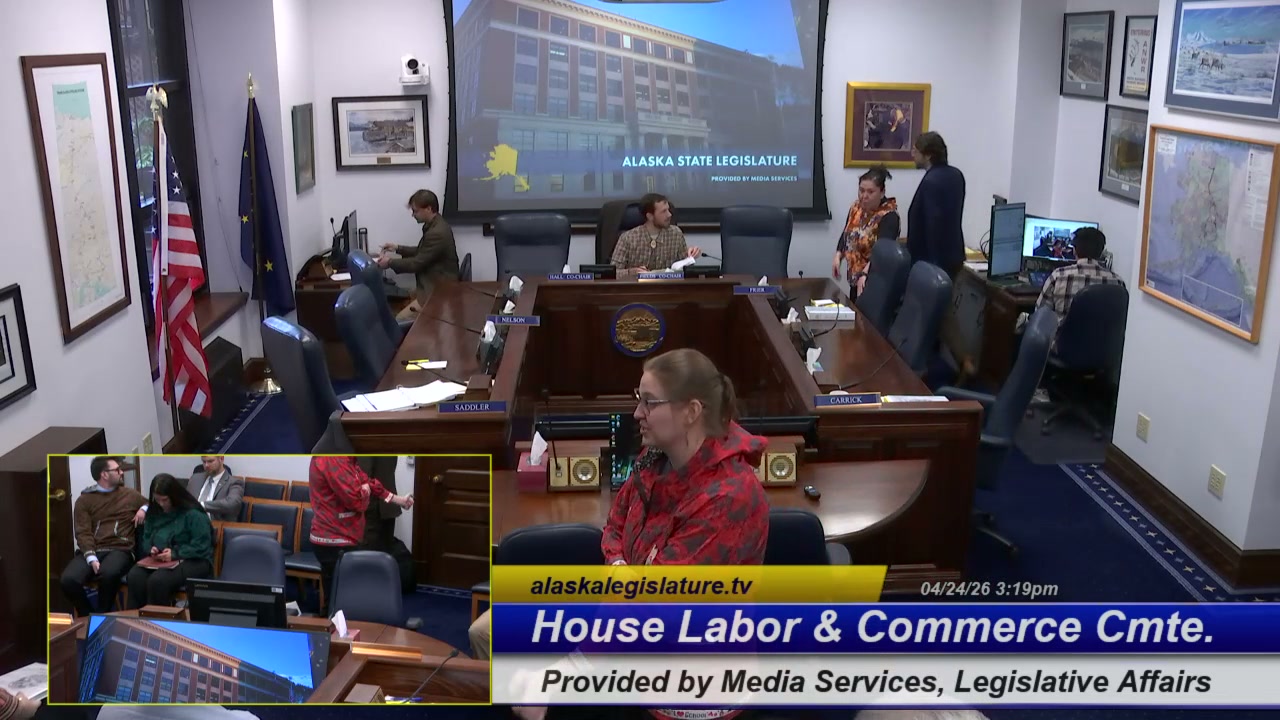
Frame from "House Labor & Commerce Committee" · Source
House panel cuts cryptocurrency kiosk limits to protect seniors from scams
The House Labor and Commerce Committee voted Friday to reduce transaction limits on cryptocurrency kiosks, cutting the monthly cap from $10,000 to $1,500 and the daily limit from $1,000 to $500 to protect elderly Alaskans from scammers.
The amendments to House Bill 324, sponsored by Representative Alexi Moore, passed over objections from Representative DeLena Johnson. She questioned whether the lower limits would stop fraud when scammers can direct victims to multiple kiosks run by different companies.
The House committee action follows similar efforts in the Senate, where Senator Tilton's companion bill has advanced through committee hearings with comparable transaction limit reductions.
The bill targets what testimony described as a growing fraud problem. Inti Harbison, a staff member working on the legislation, told the committee that attorney general reports from other states allege between 93 and 98 percent of cryptocurrency kiosk transactions are scams. Representative Andrew Fields said the amendments aim to limit large losses for income-limited seniors who might lose their homes if drained of $10,000 or more.
"For an income-limited elderly person who is scraping by on $1,000 a month, or has found an affordable apartment that maybe costs close to $1,000 a month if they're lucky, $5,000 is maybe they can stay in their home even if they get scammed up to $5,000," Fields said. "$10,000, you're talking about almost a year potentially of bare minimum expenses."
The committee first adopted Amendment N.2, which reduced the daily transaction limit from $1,000 to $500, by a vote of 6 to 1. Johnson cast the sole no vote. Fields said he chose $500 to prevent large losses, recognizing that family members often stop scams after multiple visits to kiosks. "The level of $500 is meant to prevent catastrophic losses, recognizing a lot of the time the family member stops the scam," Fields said. "The son or the daughter says, hey, Mom or Dad, oh my goodness, you went to the cryptocurrency kiosk three times."
The committee then took up Amendment N.3, which initially proposed lowering the monthly cap from $10,000 to $5,000. Representative Sarah Vance moved a conceptual amendment to further reduce that figure to $1,500. Moore accepted it as friendly.
Johnson questioned where the $1,500 figure came from and whether it would stop fraud. She noted that scammers could direct victims to kiosks run by different companies to get around the monthly limit. "We could put it down to a dollar, and with the multitude of different companies and the multitude of avenues, they can still get around that dollar monthly limit by just being able to go to multiple different companies," Johnson said.
Tracy Reno, director of the Division of Banking and Securities, confirmed that the department cannot track transactions across different kiosk operators. "If a transaction is conducted on a kiosk with the same money transmitter, they should be able to identify the customer that's using that machine and where that money went," Reno said. "If that person decides to go to a different money transmitter's kiosk, they're not related, different companies, different licensees, then I do not believe there would be any way to track that."
This article was drafted with AI assistance and reviewed by editors before publishing. Every claim can be verified against the original transcript. If you spot an error, let us know.
Comments
Sign in to leave a comment.
No comments yet. Be the first to share your thoughts.