
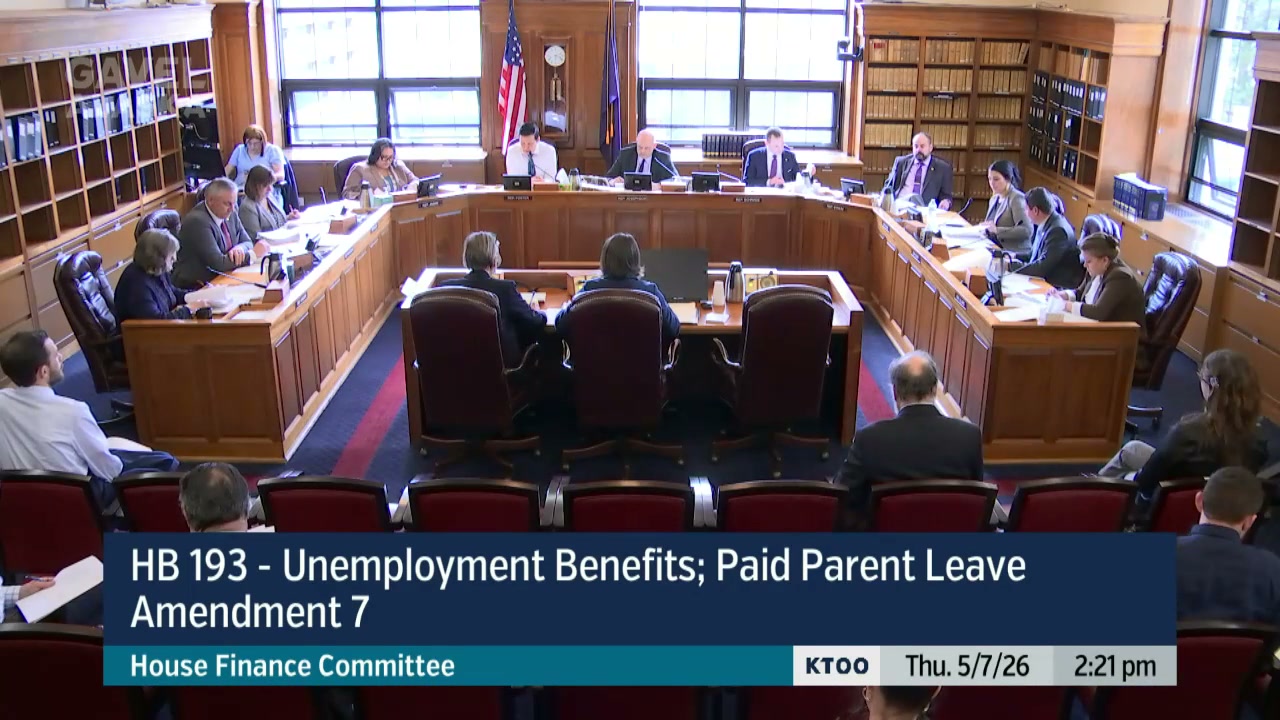
Frame from "HFIN-260507-1330" · Source
House Finance cuts paid parental leave to 12 weeks, reduces benefits to $524
The Alaska House Finance Committee voted Thursday to cut a paid parental leave proposal from 26 weeks to 12 weeks and reduce weekly payments from $817 to $524.
The changes came at the recommendation of the Alaska Department of Labor and Workforce Development to protect the long-term solvency of the paid parental leave fund. The committee adopted the amendments to House Bill 193 during a Thursday afternoon session. The House Labor and Commerce Committee had previously advanced HB 193 with the broader 26-week design.
"Amendment 3 reduces the number of weeks available to receive paid parental leave benefits from the original span of 8 to 26 to 8 to 12 weeks," said a committee member who sponsored the amendment. "I am offering this amendment at the suggestion of the Department of Labor to best ensure the solvency of the paid parental leave fund."
Representative Carolyn Hall, the bill's prime sponsor, said the reduction came after conversations with business groups and economic development organizations concerned about fund sustainability and the practical challenges of managing longer employee absences. She cited recommendations from the Disability Management Employer Coalition, which told lawmakers the national average for such programs is 12 weeks.
The committee also reduced the weekly benefit amount from $817 to $524, tying it to the state's taxable wage base rather than the Consumer Price Index. Hall said the Department of Labor recommended the change because wages fluctuate at a different pace than inflation. The $524 figure is derived from the FY26 taxable wage base and matches the current average weekly wage base. The bill would set both unemployment insurance and paid parental leave at $524 per week, up from the current UI cap of $370 that has been in place since 2009.
"This amendment comes in coordination with the Department of Labor, and yes, even though there is a reduction in the weekly benefit, this also is important to ensure that we have the two things," Hall said. "It is protecting the long-term solvency of the PPL trust fund, but additionally it matches what the current average weekly wage base is today."
The committee voted 8-3 to exempt businesses with fewer than 25 employees from the program, down from an initial threshold of 50 employees. Representative Sharkey proposed the lower threshold as a conceptual amendment, saying he managed a company with about 20 employees and understood the burden on smaller employers. Employees at firms below the 25-employee threshold would not be covered unless their employer voluntarily opts into the program.
"I wonder if the amendment sponsor and the bill sponsor would be amenable to maybe 25 instead of 50," Schrage said. "And maybe I will just make that as a conceptual amendment to change it from a threshold of employer of 50 or more employees on line 2 to instead be an employer of 25 or more employees."
This article was drafted with AI assistance and reviewed by editors before publishing. Every claim can be verified against the original transcript. If you spot an error, let us know.
Comments
Sign in to leave a comment.
No comments yet. Be the first to share your thoughts.