
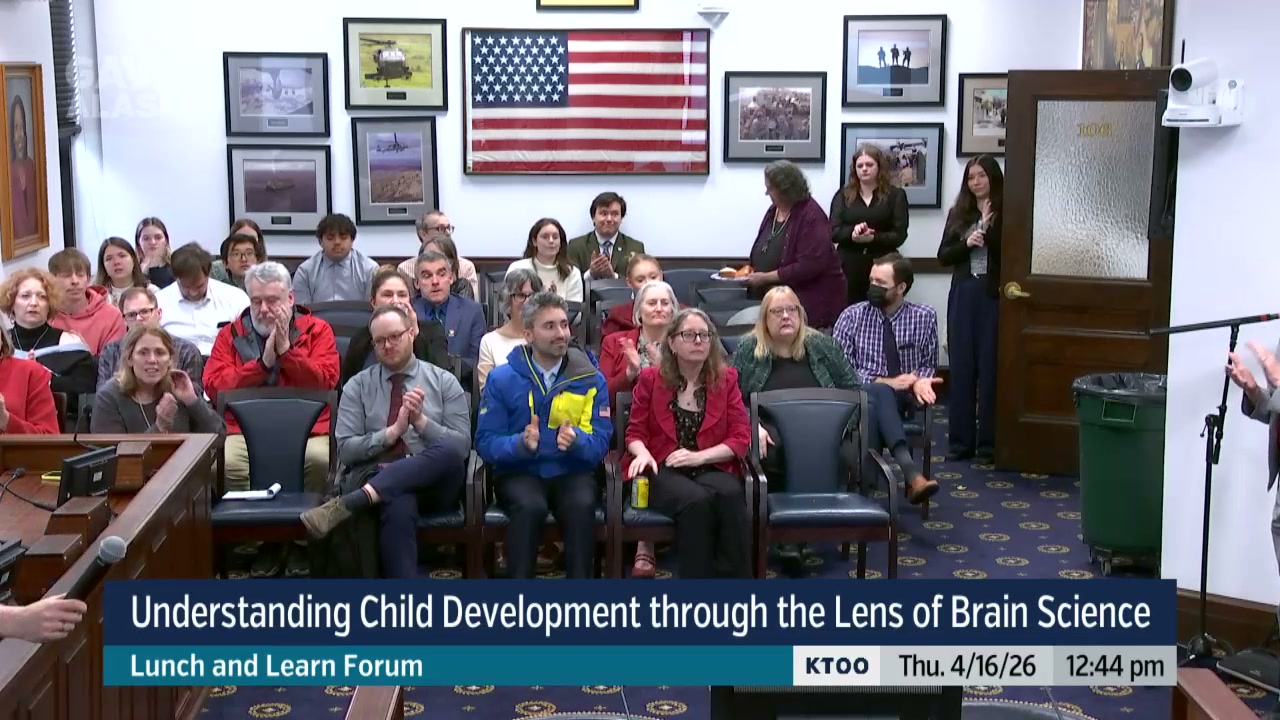
Brain science experts brief legislators on early childhood development
Two officials from the All Alaska Pediatric Partnership walked state legislators through the science of early childhood brain development at a lunch-and-learn session April 16, connecting neural research to Alaska programs that serve young children. The briefing came as lawmakers weighed competing budget priorities, with advocates having recently called on the Senate Finance Committee to restore $5.72 million in funding for the Infant Learning Program.
Tamara Ben-Yosef, executive director of the partnership, and Carmen Wenger, director of programs, presented findings on how experiences in the first years of life physically shape brain architecture. The session took place during the 90th day of the legislative session.
"Every second, a million new connections are being made in a baby's brain," Wenger said, citing research on neural development in children under age 3.
The presentation emphasized that brain growth happens fastest in early childhood. Sixty percent of adult brain size develops by age 3, and 92 percent by age 5. Neural connections that get used strengthen, while unused pathways get pruned away. That process becomes harder to change as children age.
"If we set down that strong foundation, we get the neural pathways the way to set a strong start," Wenger said. "It costs a lot more and it is a lot harder to adjust them later if you are not liking third grade reading scores or your graduation rate is not what you want it to be."
The partnership has operated for 30 years, starting as a collaboration between Alaska hospitals, tribal health organizations, and the Division of Public Health. It became a nonprofit 10 years ago with a mission to transform systems of care and increase access to health services for children.
One of its largest programs, Help Me Grow Alaska, provides resource navigation and care coordination for anyone caring for a child from prenatal to age 26. Family support specialists staff a call center from 8 a.m. to 5 p.m. and help families navigate everything from basic needs to behavioral health referrals.
"We do not provide the service ourselves," Ben-Yosef said. "We do not have medical providers or behavioral health providers, but we will get the family connected."
The presentation highlighted several Alaska programs that support early brain development: the Infant Learning Program for birth-to-3 intervention, Head Start for comprehensive family services, Parents as Teachers for home visiting, and early childhood education programs.
Wenger explained the concept of "serve and return" interactions. When babies coo or gesture and adults respond in meaningful ways, those exchanges form the foundation of brain architecture.
This article was drafted with AI assistance and reviewed by editors before publishing. Every claim can be verified against the original transcript. If you spot an error, let us know.
Related Coverage
Alaska House committee advances bill to expand early intervention eligibility
Alaska News · 1w ago · 7 views · 79% match
Senate panel approves $4.2 billion health budget with Medicaid rate hikes
Alaska News · 1d ago · 1 views · 76% match
Senate panel approves $441 million education budget with teacher incentives
Alaska News · 22h ago · 1 views · 75% match
Senate panel approves $515 million budget for family services agency
Alaska News · 1d ago · 1 views · 74% match
House panel fast-tracks insurance coverage for PANDAS treatment
Alaska News · 13h ago · 2 views · 74% match
Comments
Sign in to leave a comment.
No comments yet. Be the first to share your thoughts.