AI-powered community news covering local government, public meetings, and community issues across Alaska.
Alaska
Board Sets Fish Wheel Rules, Recovery Goals for Yukon Salmon | Alaska News
Board Sets Fish Wheel Rules, Recovery Goals for Yukon Salmon
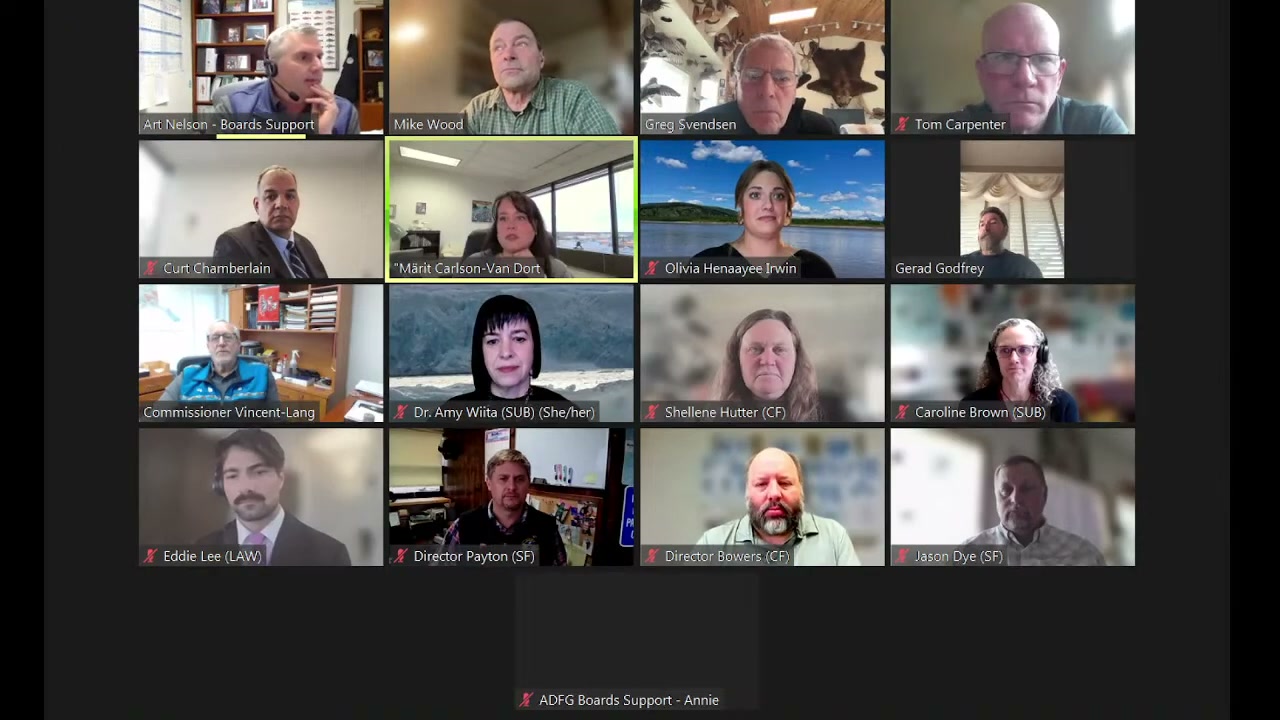
Frame from "Supplemental Proposals 189-192 (5/1/2026)" · Source
PublishedAI
Board Sets Fish Wheel Rules, Recovery Goals for Yukon Salmon
by Alaska NewsMay 11, 2026(1h ago)5 min readAlaska, USA
Share
The Alaska Board of Fisheries voted Friday to establish fish-friendly fish wheel construction standards and recovery benchmarks for Yukon River king and fall chum salmon, creating the state's first formal plans to guide management of the depleted stocks.
The board passed Proposals 189, 190 and 191 during a special online meeting. Proposal 189, which defines traditional knowledge and local knowledge in regulation, passed 6-0. Proposals 190 and 191, establishing fish wheel standards and stock recovery criteria, each passed 7-0.
The regulations codify specifications for fish wheels used in subsistence fisheries and set criteria for when the stocks could be removed from concern status. Fish wheels must now use soft mesh baskets similar to seine web and slider chutes with smooth bottoms and closed-cell foam-lined sides to minimize injury to salmon that must be released alive.
Alaska News previously reported that the board adopted conservation-focused regulations for Yukon River salmon in 2023, including a 6-inch maximum mesh size for personal-use fishing after August 15 and live-release requirements from dip nets and fish wheels.
Under the new plans, king and fall chum salmon would need to meet escapement goals for five consecutive years before being considered for delisting from stock of concern status. If annual harvests remain below historic ranges even after escapement goals are met, the department may recommend downgrading the designation to stock of yield concern rather than removing protections entirely.
The delisting criteria drew questions from board members about potential conflicts with the seven-year Canada-Alaska agreement on Yukon salmon management. Commissioner Doug Vincent-Lang cautioned that state recovery goals could create public confusion about when fishing can resume if they differ from treaty requirements.
Board member Olivia Erwin asked whether having recovery goals in a management plan involving a treaty species was a policy issue or a public education issue. Vincent-Lang said it was neither, but rather a concern that people reading regulations might not know about treaty obligations and assume they can fish once state goals are met.
Board Chair Marit Carlson-Van Dort responded that meeting the regulatory criteria would not automatically delist a stock. "There's another step in that process where the department comes back before the board with a recommendation to delist, and the board may or may not accept that recommendation," she said.
Board member Mike Wood raised concerns that the fish-friendly specifications adopted by the board may not go far enough to prevent fish injury. Wood said he consulted with fish wheel expert Stan Zarey, who has extensively studied methods to reduce damage to salmon.
This article was drafted with AI assistance and reviewed by editors before publishing. Every claim can be verified against the original transcript. If you spot an error, let us know.
"Stan, Ruth, Charlie, they were all kind of horrified that this was still considered fish friendly when we're talking about seine web," Wood said, referring to the mesh material specified in the regulations. He noted that even professionally engineered wheels can cause damage to fish heads and noses as fish slide down the webbing.
The regulations require fish wheels to be attended 24 hours per day with no live boxes, which Wood said was the most fish-friendly aspect of the requirements.
Directed king salmon fishing in the subsistence fishery has been closed since midway through 2020. There has not been a directed king salmon commercial fishery since 2008, and the sport fishery has been closed preseason since 2019. Despite closures in all fisheries, sustainable goals have not been achieved since 2019 for either king or fall chum salmon.
The drainage-wide goal of 300,000 to 600,000 fall chum salmon has not been met since 2019. Border passage targets established by the Yukon River Salmon Agreement have also fallen short.
The department supported adding fish-friendly fish wheel specifications but opposed other portions of the proposals. Department staff said management components are already found in existing regulations or exercised through department authority. The department also noted that placing delisting criteria in regulation is complicated by the Yukon River Salmon Treaty, which potentially trumps state regulations. Department staff also raised concerns that the proposals may conflict with Administrative Order 360 due to duplicative language already found in other regulations.
Board member Olivia Erwin, who worked with department staff to develop the substitute language for both proposals, said the plans provide important guidelines for when opportunities can be opened and ensure managers follow the subsistence priority. She said codifying the plans makes direction clearer for existing and future staff, commissioners and board members.
"I don't know if this plan does enough. I'm not sure what else the state of Alaska can do for our Yukon River salmon," Erwin said. "This plan is not a one-fix-all. It's not going to be a wand that fixes everything."
The board also passed Proposal 192, which replaces set gillnet gear with beach seine gear in the Eastside Setnet Fishery under the Kenai River Late Run King Salmon Stock of Concern Management Plan. Board member Mike Wood was ruled conflicted on the proposal due to his Cook Inlet setnet permit and did not vote. The proposal as amended passed 4-2.
The board amended the proposal during deliberations to remove the word "preseason" from forecast language, allowing the fishery to open based on in-season forecasts rather than only preseason projections. The board also added permissive language regarding experimental permits when the forecast is below the 14,250 large king salmon threshold.
The commercial set beach seine fishery would occur only when the forecast of large king salmon is greater than 14,250 fish. Board members debated allocation concerns, process questions and access issues. Some members raised concerns that beach seine operations may be limited to approximately 35 to 45 shore lease sites based on current lease configurations, though legal and practical questions about access remained unresolved.
Board member Tom Carpenter objected to the proposal, citing concerns about public process and the lack of traditional public testimony and committee of the whole proceedings. "We're talking about hundreds of people that own permits in Cook Inlet that have had zero say in this with the exception of written public comment," Carpenter said.
Board member Curt Chamberlain defended the action. He said delays would cost another year of data collection. "The worst thing we can do is nothing. Second worst thing we can do is delay," he said.
Commissioner Vincent-Lang said he would consider issuing cost-neutral experimental permits for beach seine operations regardless of the proposal's outcome, though the number and conditions would depend on applications received.
The board also rejected an emergency petition seeking to repeal regulations adopted at the March 2026 meeting for the Central District Drift Gillnet Fishery Management Plan in Upper Cook Inlet. The petition argued that the board's process was flawed and that substitute language was introduced too late for meaningful public participation. A motion to accept the emergency petition failed with no members in favor and six against. One member was recused from voting.
The board reopened the Upper Cook Inlet proposal window through May 7 to allow stakeholders to respond to regulatory changes made at the meeting.
The board will hold a process committee meeting as early as next month to discuss implementation of traditional knowledge in board proceedings and potentially refine the approach based on public comments.
Stay informed. Support what matters.
Free, permanent access to local news you can verify. Subscribe to support Alaska News and go ad-free.

Comments
Sign in to leave a comment.
No comments yet. Be the first to share your thoughts.