
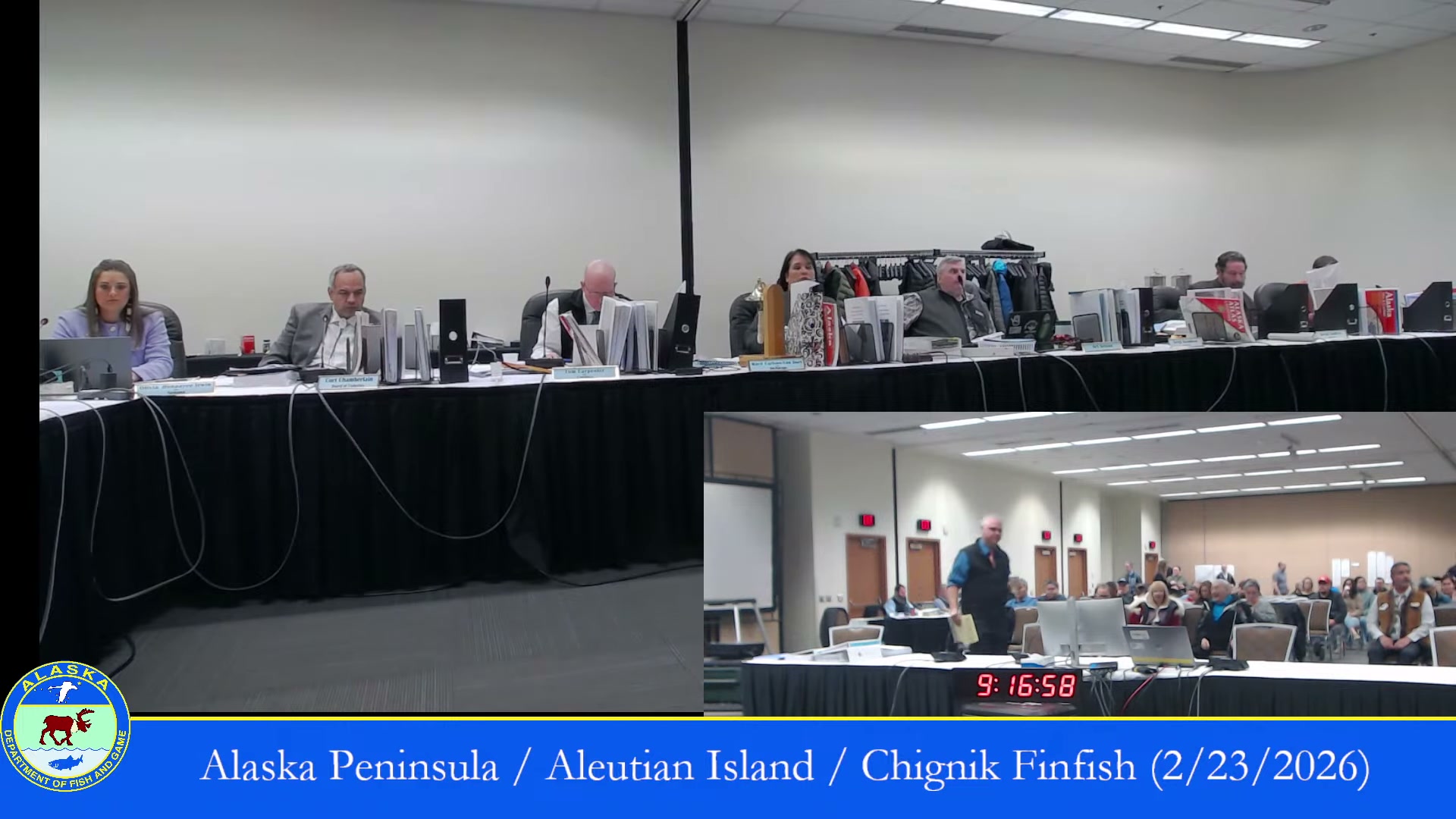
Frame from "Alaska Peninsula / Aleutian Island / Chignik Finfish (2/23/2026)" · Source
Board Restricts Fishing Gear to Protect Chinook in Chignik, Area M
The Alaska Board of Fisheries approved multiple gear restrictions Tuesday to conserve struggling Chinook salmon stocks in the Chignik Management Area and South Alaska Peninsula, despite significant cost to fishermen.
The board reduced seine net depth from 375 to 335 meshes in Chignik outside the Chignik Bay District and from 375 to 335 meshes in South Peninsula, effective 2027, to reduce Chinook bycatch. The restrictions passed 5-2 after board members acknowledged the extraordinary conservation effort by the Chignik fleet, which voluntarily requested the limitations.
"I think in this case, where we are at this period of time in history in the state of Alaska, when you get a stock of concern in the Nushagak and Kodiak and Chignik and Cook Inlet, whatever we can do to avoid fish that are swimming deeper is important right now, to let them go by," Board Chair Marit Carlson-Van Dort said.
The board also closed the eastern side of Mitrofania Island from June 1 through July 31 due to high juvenile Chinook presence. The area historically harvests most kings in the Western District. That measure passed unanimously.
"The reason for this is it is pretty clear in July, specifically in late June, that there are problem areas when it comes to juvenile king salmon," Carlson-Van Dort said. "The problem is, it is not one spot, but it typically is the side of the island that is going to be closed during the months of June and July."
The board approved tiered management restrictions in the Chignik Bay District during July peak Chinook migration, with mandatory closures if harvest caps are reached. The plan implements three tiers of management restrictions increasing in severity, reducing fishing time in the Mitrofania Island area, and establishing king salmon harvest caps that would trigger statistical area closures from July 1 through August 10.
The Chignik River Chinook salmon stock has been designated a stock of concern since 2023 after historically low returns. In 2018, the commercial harvest was just 128 fish. Federal and state subsistence users voluntarily stood down from harvesting fish that year to help runs meet escapement goals, and the Federal Subsistence Board closed the subsistence fishery. The Chignik Intertribal Coalition formed that year and organized a food drive to help communities through the winter.
Board members debated the effectiveness of net depth restrictions without definitive data on fish migration patterns by depth. "There is really no evidence at all that this is going to work," one member who opposed the measure said. "I need a metric, and there is no metric."
But supporters pointed to the fleet's willingness to absorb costs. "I find it compelling when a user group seeks to self-impose a regulation that is going to cost them some money, take some effort out, and limit their fishing opportunity for the sake of preserving Chinook," one board member who voted in favor said.
This article was drafted with AI assistance and reviewed by editors before publishing. Every claim can be verified against the original transcript. If you spot an error, let us know.
Related Coverage
Board Cuts Area M June Salmon Fishing Time 30% to Protect Yukon-Bound Chum
Alaska News · 3h ago · 85% match
Alaska Board Rejects 25% Hatchery Production Cut After Heated Debate
Alaska News · 1d ago · 1 views · 79% match
Board of Fisheries Opens Statewide Meeting With Stock Concern Action Plans
Alaska News · 4h ago · 79% match
Fish and Game sets cleanup rules for herring pound structures
Alaska News · 2d ago · 2 views · 75% match
Alaska Fishermen Report Salmon Declines Amid Bycatch, Management Concerns
Alaska News · 1w ago · 5 views · 74% match
Comments
Sign in to leave a comment.
No comments yet. Be the first to share your thoughts.