
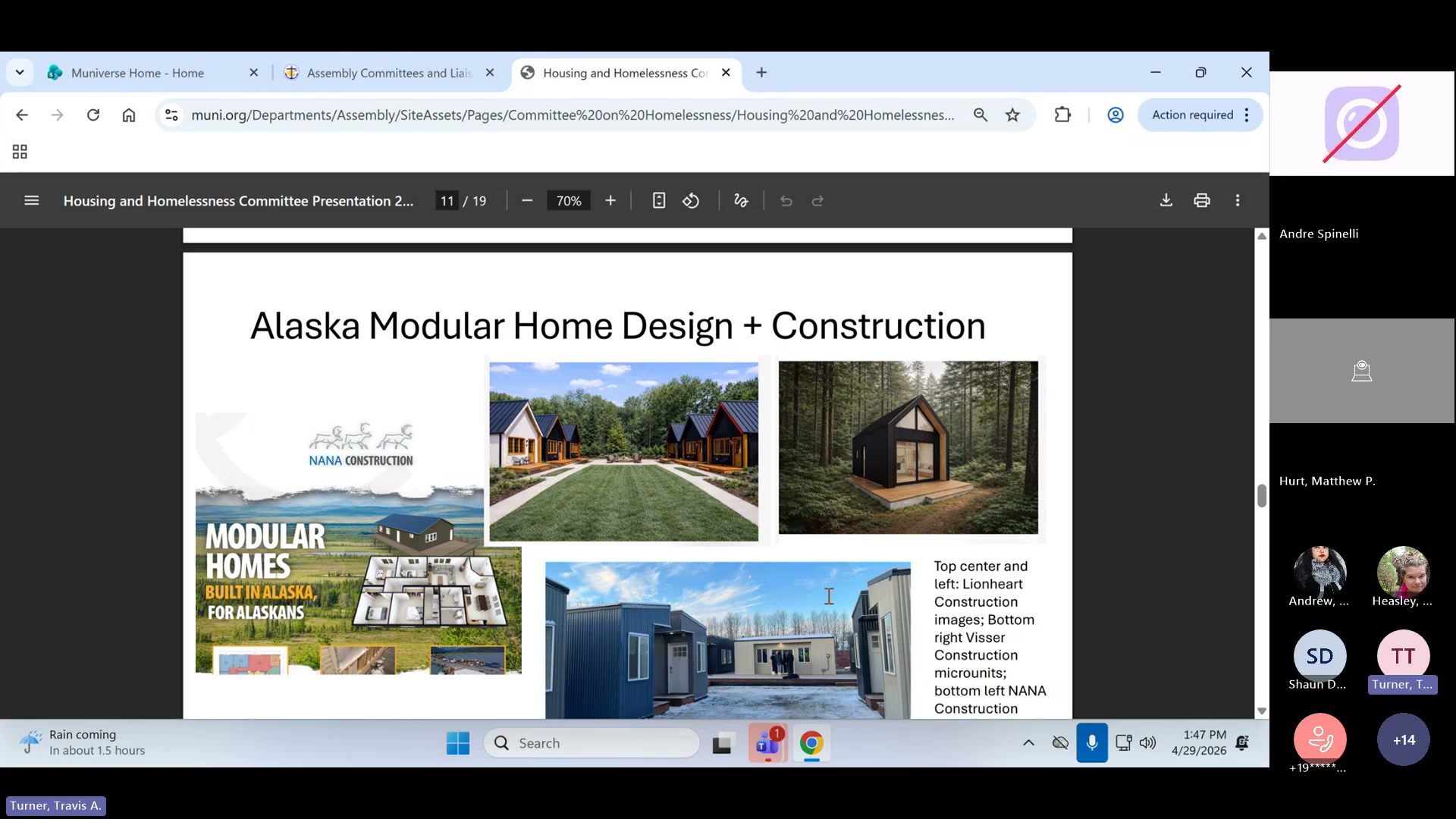
Frame from "Special Housing and Homelessness Committee Meeting" · Source
Anchorage faces mobile home park crisis as South Park Estates closes
Anchorage officials outlined emergency housing proposals Thursday as South Park Estates mobile home park moves toward closure, leaving more than 30 households with few options in a market with limited affordable housing alternatives.
The midtown park faces closure because contaminated water and rusted underground pipes cannot be repaired without removing the mobile homes themselves. The infrastructure problems mirror conditions at other aging parks across Anchorage, where galvanized steel pipes installed decades ago have deteriorated beyond repair.
South Park Estates was rezoned in 2021 for townhome development after the Assembly recognized the park could not be maintained in its current state. Residents have received closure notices in their leases since 2021. The park owner initially offered $6,000 in relocation assistance, which residents challenged as insufficient before the amount was raised to $9,000. The current offer provides more than the 270 days notice required by state law but remains far short of what residents need.
Bob Dole, director of Community and Economic Development, told the Assembly Housing and Homelessness Committee that residents face severe barriers to relocation. Most parks refuse mobile homes older than a certain age, and no location in Anchorage has 30 clustered spaces available for the community to move together.
"We still have 30-something households there. We know the park is closing," Dole said. "The infrastructure underground gets the final vote on when it no longer becomes used. And the question is, where do members of South Park or other parks move to?"
The municipality proposed two solutions. The first would create resident-owned communities where households collectively own the land through a cooperative structure, similar to co-op apartment buildings on the East Coast. The municipality would transfer land to the community entity, which would use it as collateral for loans to install water, sewer, electrical lines and roads. Monthly payments from residents would cover infrastructure costs.
The model would allow manufactured homes, modular homes or accessory dwelling units on permanent foundations. Dole said the municipality could waive age restrictions on mobile homes for these communities, focusing instead on whether structures are safe and sound enough to move.
"This creates that path to equity in that initial property going forward," Dole said. "They own the land under that building, which we identified as a flaw before."
The second proposal would develop cottage communities using modular homes built in Alaska. The municipality would provide land and seed funding to jumpstart local modular production if sufficient demand exists. At least two Alaska companies have expressed interest in manufacturing modular homes if orders reach viable levels.
This article was drafted with AI assistance and reviewed by editors before publishing. Every claim can be verified against the original transcript. If you spot an error, let us know.
Comments
Sign in to leave a comment.
No comments yet. Be the first to share your thoughts.