
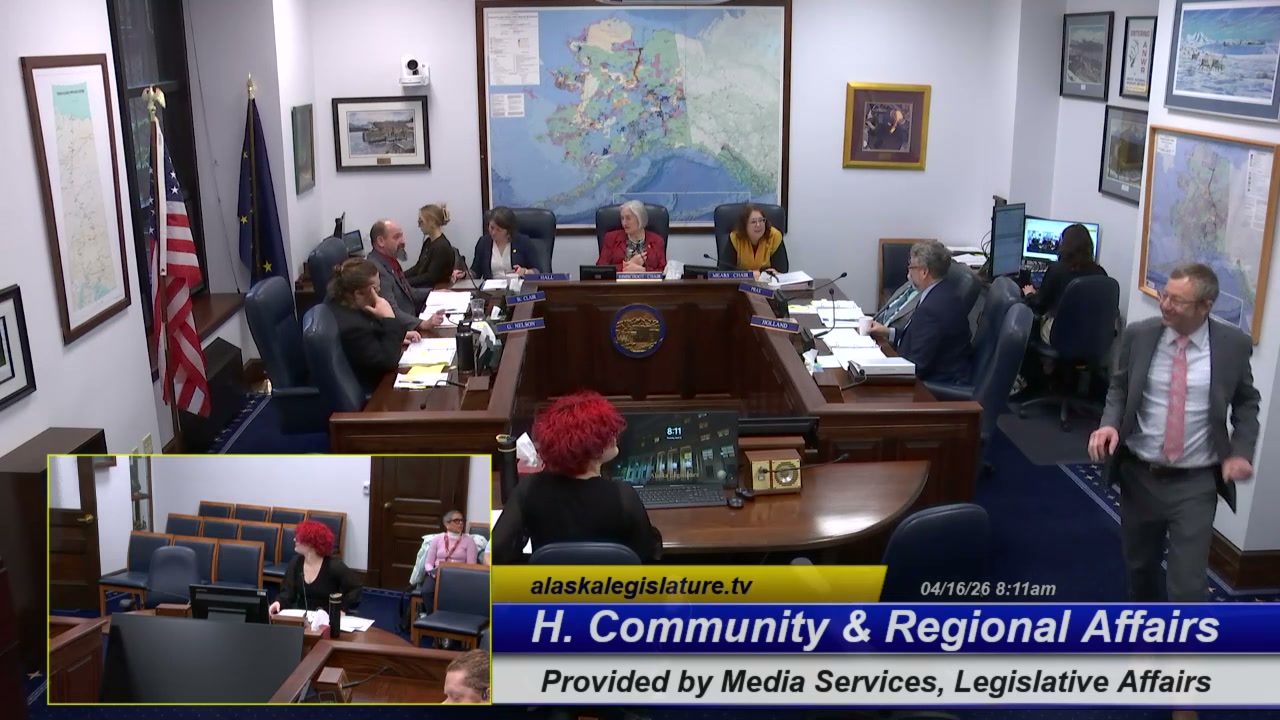
Frame from "House Community & Regional Affairs, 4/16/26, 8am" · Source
Alaska right-to-repair bill draws fire over broad scope and safety concerns
Alaska lawmakers raised concerns Thursday about a right-to-repair bill that would apply to products ranging from iPhones to heavy equipment, warning the measure could create safety hazards for aircraft, marine vessels, and critical systems in remote communities.
The House Community and Regional Affairs Committee heard its fifth discussion of House Bill 162 on April 16. The bill would require manufacturers to provide consumers and independent repair shops the same parts, tools, and documentation given to authorized repair providers. It would also prohibit manufacturers from using parts pairing in ways that cause products to display misleading alerts or prevent functional replacement parts from working.
Representative G. Nelson said the bill would create what he characterized as the most sweeping definition of a digital product in the United States.
"With the sweeping, the broadness of this bill, it would apply to everything from the iPhone to a multimillion-dollar, million-pound piece of equipment," Nelson said.
Nelson said constituents who hear of his opposition to the bill are irritated because they want to repair their products, with motor vehicles being their main concern. Motor vehicles are specifically exempted from the legislation due to existing federal standards and strong industry lobbying, according to bill staff Emma Solchinski.
"As I have been talking to my constituents and they hear of, you know, my pretty obvious opposition to this bill, they are irritated at me for opposing their right to repair their products," Nelson said. "And the main thing that they are irritated about not being able to repair is their motor vehicle."
The bill exempts motor vehicles, medical devices, life-safety systems, security systems monitored by a person providing a security service, and physical access control equipment. Power sports, farm, forestry, construction, industrial, utility, mining, road building, and material handling equipment are partially exempt. Manufacturers of that equipment would be allowed to charge reasonable costs for parts rather than being required to match the most favorable terms they offer authorized providers.
The bill also includes provisions stating it regulates only what is not preempted by federal law, addressing concerns about federally regulated systems such as aircraft.
Nelson raised concerns about the bill's potential application to aircraft, marine vessels, and generators that remote communities rely on. He said manufacturers told him they would not establish training programs even though the bill allows them to require certification or verification of competency before providing access to critical and safety systems.
"This would apply to aircraft as well, marine vessels, gensets that, that, that our remote communities rely on," Nelson said. "It would apply to all of that, not just dishwashers and iPhones."
This article was drafted with AI assistance and reviewed by editors before publishing. Every claim can be verified against the original transcript. If you spot an error, let us know.
Comments
Sign in to leave a comment.
No comments yet. Be the first to share your thoughts.