
Alaska Energy Survey Shows Strong Support for Renewables, Mixed Views on Nuclear
Alaska Energy Survey Shows Strong Support for Renewables, Mixed Views on Nuclear
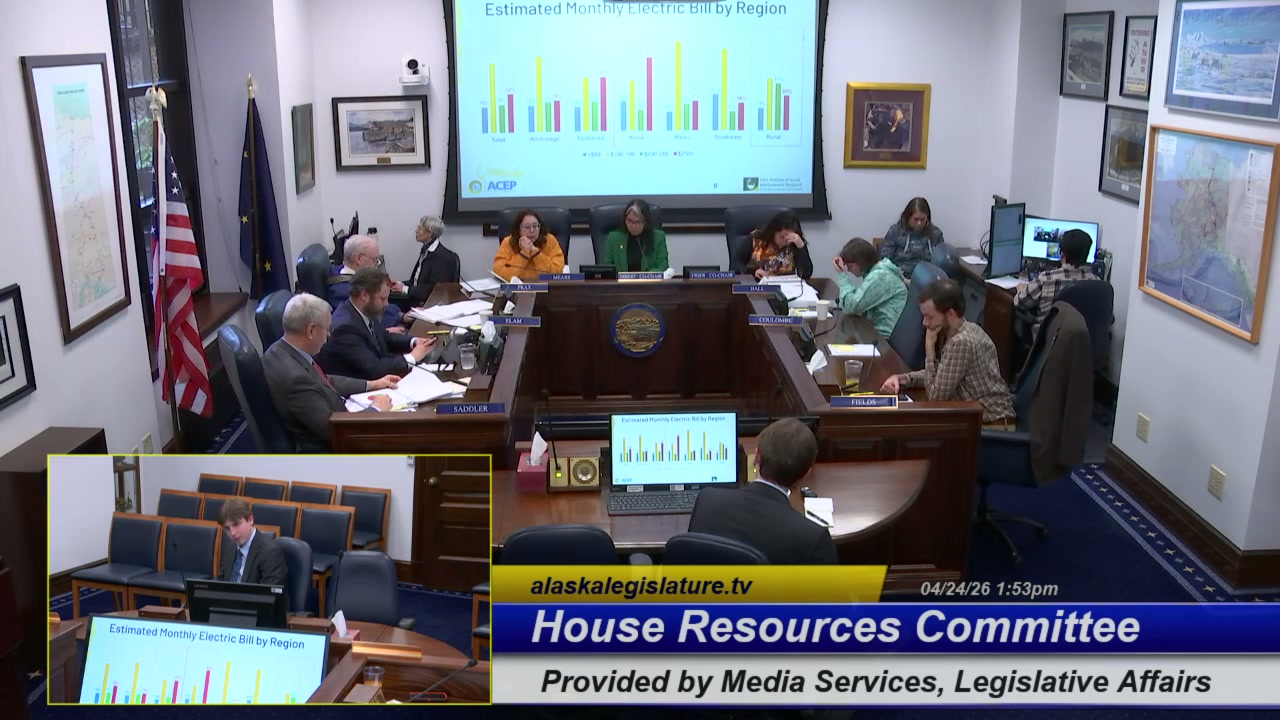
The Alaska Center for Energy and Power and the Institute of Social and Economic Research presented survey results Friday showing Alaskans favor expanding hydroelectric, solar and wind power while opinions on nuclear energy remain divided.
Gwen Holdman, chief scientist at the Alaska Center for Energy and Power, and Diane Hirshberg, director of the Institute of Social and Economic Research, told the House Resources Committee that three years of polling data reveal consistent support for renewable energy development across the state. The surveys, conducted between 2023 and 2025, sampled between 500 and 600 Alaskans each year.
Hydroelectric power drew the strongest support, with 80% of Southeast Alaska respondents calling their electric bills affordable. Juneau residents pay about 13.7 cents per kilowatt hour. By contrast, 40% of Fairbanks and Kenai Peninsula residents said their bills were unaffordable. Fairbanks residential electricity rates average about 32 cents per kilowatt hour.
Fairbanks and other peripheral rail belt customers face high energy burden, which measures how much of a household's income goes to energy costs, Holdman said. The average Fairbanks resident spends 10% of household income on energy costs. That is more than three times the 3% threshold considered high burden in the United States.
The surveys found 70% of Alaskans support building a natural gas pipeline, with strongest backing in the Mat-Su region and weakest in Southeast Alaska. But support dropped 27% when respondents were told the project might require additional state investment. Support fell further if energy costs would increase compared to current rates.
A lot of the support is tied to the idea that this is going to result in lower cost or stable cost energy for Alaskans, Holdman said.
On nuclear energy, awareness of advanced reactor technology increased from 25% in 2023 to 40% in 2025. Support for using nuclear power in Alaska rose about 10% over the same period. When given information about microreactors, small reactors that could fit in an oversized shipping container, support increased significantly during the survey itself.
Fairbanks showed the highest awareness of advanced nuclear technology, likely because of the proposed microreactor at Eielson Air Force Base. That project would be the first commercial microreactor deployed in the United States if it stays on schedule for 2027 or 2028.
The presentation highlighted energy cost challenges facing rural Alaska. Hub communities pay unsubsidized electric rates well above the U.S. average, while communities under 1,000 residents face even higher costs. The Power Cost Equalization Program subsidizes residential customers, but covers only about one-third of kilowatt hours sold in rural Alaska.
This article was drafted with AI assistance and reviewed by editors before publishing. Every claim can be verified against the original transcript. If you spot an error, let us know.
Related Coverage
Rural Alaska Electricity Costs Run Three to Five Times Urban Rates
Alaska News · 5d ago · 1 views · 79% match
House Resources Committee debates LNG equity stakes, rejects wildlife refuge amendments
Alaska News · 1d ago · 2 views · 78% match
Senate panel examines regulatory questions on gas pipeline tax plan
Alaska News · 2d ago · 9 views · 77% match
Mayors Oppose Alaska LNG Tax Bill, Cite Revenue Concerns
Alaska News · 2w ago · 4 views · 77% match
Senate panel examines LNG project economics, megaproject risks
Alaska News · 1d ago · 4 views · 77% match
Comments
Sign in to leave a comment.
No comments yet. Be the first to share your thoughts.